TDII Extra: Novell Buying and Selling

Today in 1994, Novell acquired WordPerfect and Quattro Pro in an attempt to compete with Microsoft’s word processing and spreadsheet products. Continuing to lose market share, Novell sold the products to Corel in January 1996. Today it was announced that three private-equity firms are buying Novell for $2.2 billion.

Posted in This day in information | Leave a comment

This Day in Information: Catmul’s Law

Fifteen years ago today, Toy Story opened in U.S. theaters, the first feature-film to be made entirely with computer-generated imagery (CGI). The current issue of ACM Queue magazine features Ed Catmul, President of Pixar Animation Studios, talking with Stanford computer graphics professor Pat Hanrahan, a former Pixar employee who worked with Catmull on Pixar’s acclaimed RenderMan rendering software, for which they share a Scientific and Engineering Oscar. Continue reading

Posted in Film, This day in information | Leave a comment

This Day In Information: World TV Day

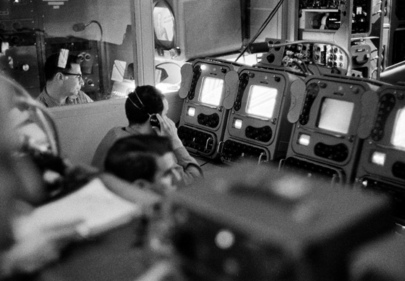
Today is World Television Day. On 21 and 22 November 1996 the United Nations held

UN TV production in 1956

the first World Television Forum, “where leading media figures met under the auspices of the United Nations to discuss the growing significance of television in today’s changing world and to consider how they might enhance their mutual cooperation.” See a photo essay on the UN and TV here and world coverage here.


Posted in This day in information | Leave a comment

This Day in Information: First Sighting of Hackers

Today in 1963, the MIT student newspaper reported that many telephone services have been curtailed “because of so-called hackers,” the earliest known use of the term.

Posted in This day in information | Leave a comment

Library Books per Capita, by State

The Tetherless World Constellation project at RPI mines open government datasets using semantic web technologies. So far, they have developed 45 demos, one of them showing library books per inhabitants of each state in the U.S. Other questions you may have and they provide answers for include who visits the White House most frequently, how do smoking quit rates, state by state, relate to unemployment, taxes, and violent of crimes, and the relations between the biography of U.S. Supreme Court justices and their decisions.

Posted in data visualization, Libraries | Leave a comment

InfoStory Quotes: Chicken Soup for the Soul

Rameses II, who ascended the throne in 1300 B.C.E., assembled a library that contained official documents, literature, historical treatises, and works of moral philosophy and proverbial wisdom, science, and medicine. Rameses’ library bears the inscription “the dispensary of the soul” (or “the house of healing for the soul”). In 1345, Richard de Bury wrote in Philobiblion, “All the glory of the world would be buried in oblivion, unless God had provided mortals with the remedy of books.” And in 1780, Jean-Baptiste Cotton des Houssayes wrote in The Duties and Qualifications of a Librarian, “It is impossible, in fact, to attach too much importance to the advantages resulting from an intelligent and methodical order in the arrangement of a library. … If, as is said, books are the medicine of the soul, what avail these intellectual pharmacopoeias, if the remedies which they contain are not disposed in order and labeled with care?”


Posted in Libraries, Quotes | Leave a comment

This Day in Information: First Dated Book Printed in English

Caxton's colophon

Today in 1477, William Caxton published Dictes and Sayenges of the Phylosophers. It was the first dated book printed in English. It contains not only the date, but for the first time in England, a printer’s colophon showing the name of the printer, and the place of publication.

Posted in Books, This day in information | Leave a comment

Only Connect: What Facebook Means to Young People

Two interesting discussions of the role Facebook plays in the lives of the young: Jeff Jarvis on college students who “are making use of the internet that is truer to its nature: It is not a medium but is a connector;” and Sim Simeonov on why Facebook is a great fit with high schoolers and how Facebook’s new messaging product makes it “the complete mission-critical infrastructure for getting homework done.”

Posted in Social Networks | Leave a comment

The Death of the News Blog: Print to the Rescue

Larry Kramer, founder of CBS MarketWatch, writes today about Nick Denton’s (Gawker’s) decision to abandon the blog format in favor of “curation.” What it means is that the old print, yes, dare I say it, “old” newspaper and magazine print format, is coming back. Editors are back in, last minute’s blog post and 140 characters are out. For the first 20 years of the life of the web, we have been subjected to two mantras: 1. print is dead. 2. Editors are dead (no “gatekeepers” on the web, the “middleman” is out).  Wrong. Print defined a familiar format for readers, one that they could come back to daily (or monthly or whatever) and immediately know where to find what. And editors made decisions about what’s important, what deserves to be the feature story. Actually, print and editors never went away. Print is still the preferred advertising medium (it’s just that most print publishers and editors fell for the new mantras) and editors reign supreme online (see YouTube, for example). So now we are coming back full circle, killing the blog and resurrecting the newspaper/magazine format online. The more things change, the more they stay the same.

Posted in News, Print | Leave a comment

This Day in Information: The Beatles on iTunes

Fake Steve Jobs on today’s significance.

But the money quote (his term) came yesterday, about the Facebook “this is not email” annoucnement:

“This, we are told, is the future of messaging. All of these feeds (IMs, SMS, email) streamed into one giant steaming mountain of crap. Dear friends, this isn’t a product. It’s a punishment. But apparently there is nothing that any of us can do to stop it.”

Posted in This day in information | Leave a comment