Little Free Libraries Around the World

From the Boston Globe:

The emergence of the “Little Free Library” demonstrates not just the agility of individuals, but the stiff-jointed hoariness of government. Even as public libraries and their advocates bemoan their increasing irrelevance in a digital culture, they seem impotent to stop it. Succumbing to the perceived need to offer e-books, many offer online borrowing, contributing to their own demise by becoming the worst kind of middleman: one dependent on taxpayer dollars.

In doing so, they abandon their foundation, and perhaps eventual savior — the physical book.

Not so the Little Free Library, a grass-roots initiative that is creating micro-libraries all over the country, offering books and only books. In places as diverse as Cambridge, Fall River, Lynnfield, and Framingham, individuals are erecting what look like oversized birdhouses for the purpose of sharing paperback and hardcover books. Passers-by are invited to borrow them on the honor system. They’re mini-libraries with no cards, no fines, no invasive record of one’s reading history — just books, glorious books.

From the Little Free Library website:

Our conservative estimate of Little Free Libraries in the world is between 5,000 and 6,000 in 36 countries.  We estimate than at least 1,650,000 books were donated and borrowed between January, 2010 and today.  For every book donated or taken to read, we believe that five to ten people stopped and perused the selection.   That translates to between 8,250,000 and 16,500,000 visits.   

Posted in Books, Libraries | Leave a comment

Debugging the Origin of the Term “Bug”

Edison, debugging

Edison, debugging

Alexander Magoun and Paul Israel write in The Institute:

The use of “bug” to describe a flaw in the design or operation of a technical system dates back to Thomas Edison. He coined the phrase 140 years ago to describe technical problems during the process of innovation.

In 1873 Edison first confronted what he later called a bug when he began developing a quadruplex telegraph system to transmit and receive up to four separate telegrams on a single wire simultaneously. If he succeeded, his patron, Western Union Telegraph, would profit greatly from the increased message capacity. The 26-year-old engineer combined diplex and duplex circuits to send two messages in each direction using changes in current direction and strength. The problem in this approach was the false break in a message’s signal created by the changing polarity of the electromagnet in the diplex circuit when the current switched direction.

Edison worked around this by building what he later called a “bug trap” to isolate the unwanted break so that it wouldn’t interfere with the meaning of the Morse-coded signal. In August 1873 he filed a patent caveat, a form of patent application long since discontinued, which included this solution. A year later it became part of his application for U.S. Patent 480,567, which did not issue until 1892 due to patent-interference claims and court cases.

Edison is largely responsible for broadening the term’s application. The term itself appeared in his notebooks in 1876, first occurring that July in connection with his experiments on another approach to multiplexing signals over a wire. A later Edison biography made note of its frequent appearance in his notebooks. One entry, referring to incandescent lighting, read: “Awful lot of bugs still. Let [Dr. Otto] Moses try…to rid us of them.” …

The term was also spread by members of the electrical community. By the mid-1880s, after the quadruplex had become a common feature of telegraphy, engineers made frequent reference to Edison’s bug trap. And in 1888, William Maver, who later wrote the standard book on American telegraphy, noted that those familiar with the quadruplex were “aware that there is tendency in its operation termed, not very elegantly perhaps, the ‘bug.’ It was first so called by Edison.”

Author and engineer Thomas Sloane standardized Edison’s terms in his 1892 Standard Electrical Dictionary. He defined a bug as “[a]ny fault or trouble in the connections or working of electric apparatus,” with a bug trap being a “connection or arrangement for overcoming” said bug. Both terms, “[i]t is said […] originated in quadruplex telegraphy.” Funk and March’s 1895 Standard Dictionary of the English Language gave the term to the general public as “a fault in the working of a quadruplex system or in any electrical apparatus.”

By the early 1900s the idea of bugs and bug traps had gone well beyond Edison and his inventions. The International Correspondence Schools’ 1913 Elements of Telegraph Operating referred to the “bug-trap remedy” as one of several solutions for eliminating “slight disturbances” in a circuit. In 1921, Transactions of the American Institute of Electrical Engineers included a lengthy paper on railroad telegraphy and telephony in which bug traps were the subject of considerable discussion…

Grace Hopper did not invent the bug, but she did draw cartoons of gremlins that represented chads, or fragments, created when holes are made in her computer’s punched paper tapes. Like Edison, she was recalling the word’s older origins in the Welsh bwg, the Scottish bogill or bogle, the German bögge, and the Middle English bugge: the hobgoblins of pre-modern life, resurrected in the 19th century as, to paraphrase philosopher Gilbert Ryle, ghosts in the machine. Bugs are not only for today’s computers or software; for more than 100 years, they have represented the challenges of an imperfect world that engineers work to overcome.

See also This day in information: Software bugs

Posted in Computer history, Innovation, Telegraph | 1 Comment

Nothing Lasts Forever: On Extinctions and Dead Media

See also the Dead Media Project (and its field notes) and NYU’s Dead Media Archive.

Posted in Dead media | Leave a comment

Apple: Welcome, IBM. Seriously.

Apple_welcome-ibm-seriouslyToday in 1981,  Apple Computer ran a full-page ad in the The Wall Street Journal, twelve days after IBM entered the personal computer market with the launch of the IBM PC.

Posted in Apple, Computer history, This day in information | Leave a comment

Everything You Want to Know About Playstation (Infographic)

Everything You Want To Know About PlayStation

by rachaelfernandes090.
Explore more infographics like this one on the web’s largest information design community – Visually.

Posted in Infographics, Video Games | Leave a comment

Steve Jobs: Thank You, Bill Gates

Jobs_Time_aug181997

Today in 1997, Steve Jobs was on the cover of Time Magazine, thanking Bill Gates for saving Apple.

Posted in Apple, Computer history, Microsoft, This day in information | Leave a comment

Computer Animation: From Fantasmagorie to Monsters University

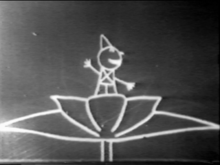
Fantasmagorie_(Cohl)_1908AnimationToday in 1908, the first animated cartoon, Fantasmagorie, was released. The film (watch it on YouTube) was created by Émile Cohl by drawing each frame on paper and then shooting each frame onto negative film, which gave the picture a blackboard look.

The film features a stick figure moving about and encountering all manner of morphing objects, such as a wine bottle that transforms into a flower. There are also sections of live action where the animator’s hands enter the scene. The title is a reference to the “fantasmograph,” a mid-Nineteenth Century variant of the magic lantern that projected ghostly images that floated across the walls.

Also today, in 1986, Pixar Animation Studios premiered Luxo Jr. at SIGGRAPH, its first film following its establishment as an independent film studio. It is a computer-animated short film (two and a half minutes, including credits). The title character, a small desk lamp, will become a part of the company’s logo. It was the first Computer-generated Imagery (CGI) film nominated for an Academy Award.  Luxo_Jr._poster

Luxo Jr. sent shock waves through the entire industry – to all corners of computer and traditional animation. At that time, most traditional artists were afraid of the computer. They did not realize that the computer was merely a different tool in the artist’s kit but instead perceived it as a type of automation that might endanger their jobs. Luckily, this attitude changed dramatically in the early ’80s with the use of personal computers in the home. The release of our Luxo Jr. … reinforced this opinion turnaround within the professional community.” –Edwin Catmull, quoted in Rita Street, Computer Animation: A Whole New World, 1998.

There were pioneering efforts in computer animation before Pixar. This 1963 clip may have been the world’s first computer animation.

If you would like to study computer animation, try the free tutorial at the Kahn Academy, or read Rick Parent’s Computer Animation, Third Edition: Algorithms and Techniques.

Pixar still represents the state-of-the-art of computer animation today,  releasing a new feature each year.  Brave, its 13th feature released last year, was “infused with the spirit of Steve Jobs” (see here for Catmull paying tribute to Jobs) and new animation software “which makes flowing hair, fur, clothing and water look more realistic,” according to The Telegraph.

Monsters University was released in June 2013, grossed more than $600 million worldwide by August and received positive but not overly excited reviews from the critics. Jake Coyle of the Associated Press gave the film three out of four stars, saying “Pixar’s Monsters University might not be as gifted as some of its other movies, but sometimes it’s alright to be OK.”

Posted in Animation, Digitization, This day in information | Leave a comment

Social Networks and Loneliness

“I share, therefore  I am”
Posted in Social Impact, Social Networks | Leave a comment

Breaking News from 1981: Read the Paper on You Home Computer!

“It takes over two hours to receive the entire text in a newspaper and it costs $5 for an hour of use so the ‘tele-paper’ won’t be much of a competition to the 20 cents street edition.”

Posted in Internet, Newspapers | Leave a comment

Writers on Writing

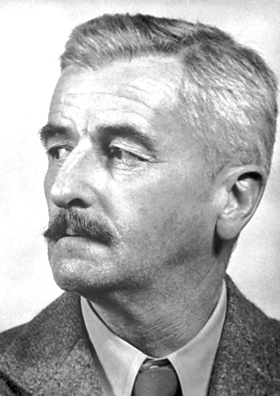
Faulkner, 1949

Faulkner, 1949

William Faulkner

I discovered writing was a mighty fine thing. You could make people stand on their hind legs and cast a shadow, and as soon as I discovered it I wanted to bring them all back.

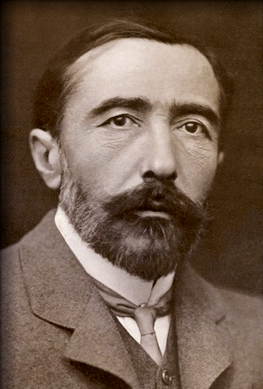
Joseph Conrad

Conrad, 1904

Conrad, 1904

To snatch in a moment of courage, from the remorseless rush of time, a passing phase of life, is only the beginning of the task. The task approached in tenderness and faith is to hold up unquestioningly, without choice and without fear, the rescued fragment before all eyes in the light of a sincere mood. It is to show its vibration, its color, its form; and through its movement, its form, and its color, reveal the substance of its truth — disclose its inspiring secret: the stress and passion within the core of each convincing moment. In a single-minded attempt of that kind, if one be deserving and fortunate, one may perchance attain to such clearness of sincerity that at last the presented vision of regret or pity, of terror or birth, shall awaken in the hearts of the beholders that feeling of unavoidable solidarity; of the solidarity in mysterious origin, in toil, in joy, in hope, in uncertain fate, which binds men to each other and all mankind to the visible world.

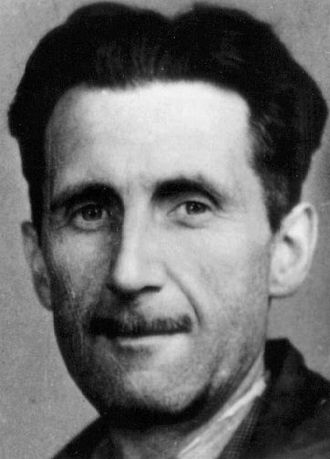
George Orwell

Putting aside the need to earn a living, I think there are four great motives for writing, at any rate for writing prose. They exist in different degrees in every writer, and in any one writer the proportions will vary from time to time, according to the atmosphere in which he is living. They are:

Orwell, 1933

Orwell, 1933

Sheer egoism. Desire to seem clever, to be talked about, to be remembered after death, to get your own back on the grown-ups who snubbed you in childhood, etc., etc. It is humbug to pretend this is not a motive, and a strong one. Writers share this characteristic with scientists, artists, politicians, lawyers, soldiers, successful businessmen — in short, with the whole top crust of humanity. The great mass of human beings are not acutely selfish. After the age of about thirty they almost abandon the sense of being individuals at all — and live chiefly for others, or are simply smothered under drudgery. But there is also the minority of gifted, willful people who are determined to live their own lives to the end, and writers belong in this class. Serious writers, I should say, are on the whole more vain and self-centered than journalists, though less interested in money.

Aesthetic enthusiasm. Perception of beauty in the external world, or, on the other hand, in words and their right arrangement. Pleasure in the impact of one sound on another, in the firmness of good prose or the rhythm of a good story. Desire to share an experience which one feels is valuable and ought not to be missed. The aesthetic motive is very feeble in a lot of writers, but even a pamphleteer or writer of textbooks will have pet words and phrases which appeal to him for non-utilitarian reasons; or he may feel strongly about typography, width of margins, etc. Above the level of a railway guide, no book is quite free from aesthetic considerations.

Historical impulse. Desire to see things as they are, to find out true facts and store them up for the use of posterity.

Political purpose. –Using the word ‘political’ in the widest possible sense. Desire to push the world in a certain direction, to alter other peoples’ idea of the kind of society that they should strive after. Once again, no book is genuinely free from political bias. The opinion that art should have nothing to do with politics is itself a political attitude.

It can be seen how these various impulses must war against one another, and how they must fluctuate from person to person and from time to time.

For more on writing by writers, see Brain Pickings


Posted in Writers, Writing | Leave a comment