First Photograph of a Solar Eclipse

Today in 1854, William and Frederick Langenheim made eight sequential photographs of the first total eclipse of the sun visible in North America since the invention of photography. Although six other daguerreotypists and one calotypist are known to have documented the event, only these seven daguerreotypes survive. In the northern hemisphere, the moon always shadows the sun from right to left during a solar eclipse; these images therefore seem odd because they are, like all uncorrected daguerreotypes, reversed laterally as in a mirror.

Posted in Photography, This day in information | Leave a comment

First WWW Conference

WWW logo designed by Robert Cailliau

Today in 1994, the First International WWW Conference was held at CERN, Geneva. Tim Berners-Lee in Weaving the Web: “It was the first time the people who were developing the Web were brought together with all sorts of people who were using it in all sorts of ways. The connections were electric…. The conference marked the first time that the people who were changing the world with the Web had gotten together to set a direction about accountability and responsibility, and how we were actually going to use the new medium.”

Posted in Computer history, This day in information, World Wide Web | Leave a comment

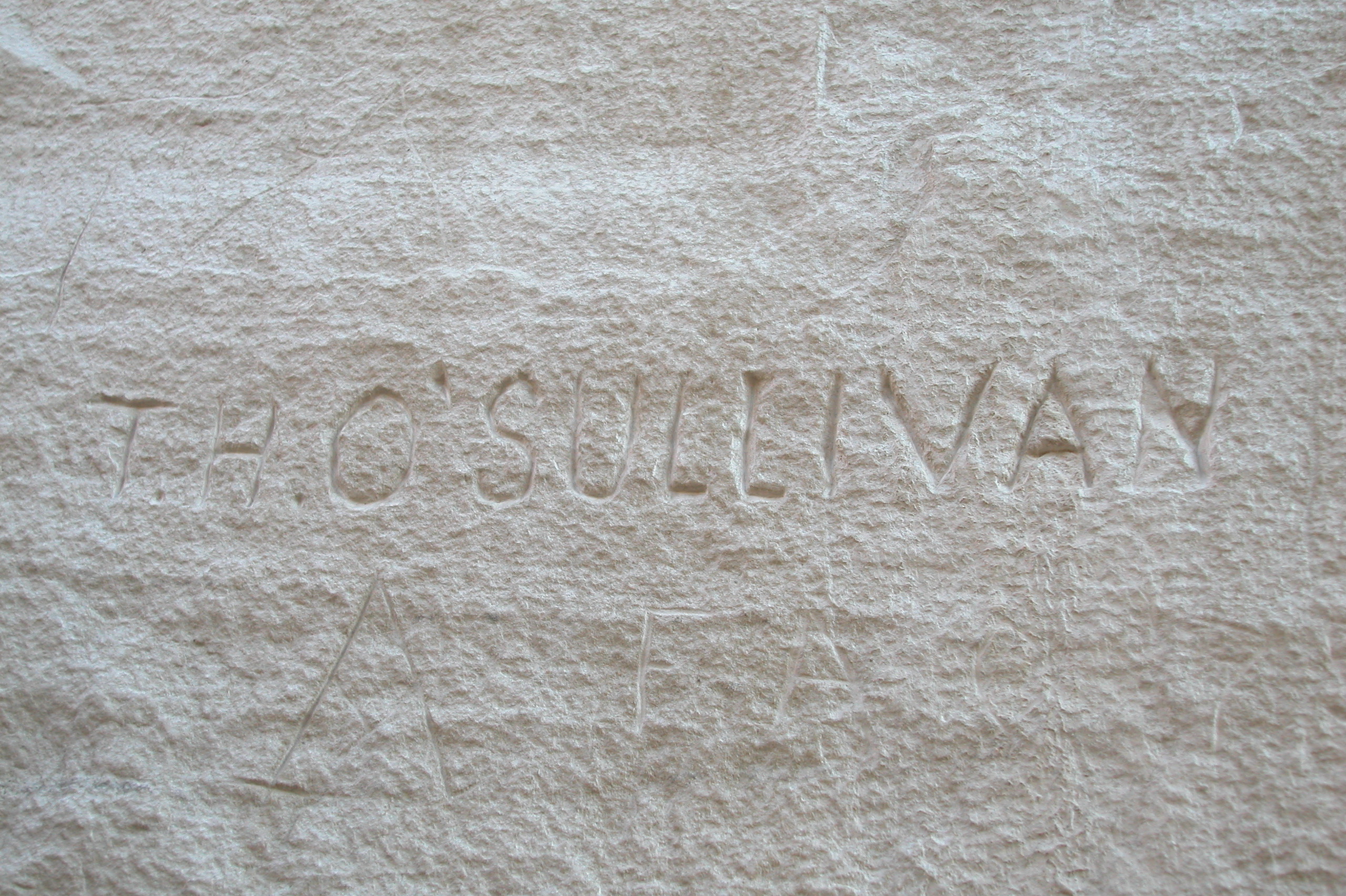
Ensign Don Joseph de Payba Basconzelos, 1726, and T.H. O’Sullivan, 1873

The Atlantic: “Nearly 150 years ago, photographer [Timothy] O’Sullivan came across this evidence of a visitor to the West that preceded his own expedition by another 150 years — A Spanish inscription from 1726. This close-up view of the inscription carved in the sandstone at Inscription Rock (El Morro National Monument), New Mexico reads, in English: ‘By this place passed Ensign Don Joseph de Payba Basconzelos, in the year in which he held the Council of the Kingdom at his expense, on the 18th of February, in the year 1726.'”

O’Sullivan responded with his own inscription:

Posted in Inscriptions | Leave a comment

First University Museum

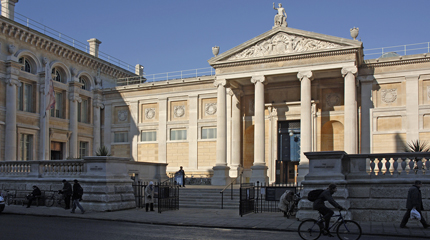
Today in 1683, Ashmolean Museum of Art and Archaeology, the world’s first university museum, opened in Oxford, England. The present Ashmolean was created in 1908 by combining two ancient Oxford institutions: the University Art Collection and the original Ashmolean Museum.

Posted in Museums, This day in information | Leave a comment

From the Archives: “What Has God Wrought?”–A Love Story

Today in 1844, Samuel Morse sent the the message “What Has God Wrought” to officially open the first telegraph line, between Washington, D.C. and Baltimore, launching an industry and ending a rocky journey that began with the 1837 resolution by the U.S. House of Representatives requesting the Treasury Secretary to recommend how “a system of telegraphs for the United States” should be established.

Wikipedia–and many other sources–report that “Annie Ellsworth chose these words from the Bible (Numbers 23:23); her father,  Henry Leavitt Ellsworth, [the first commissioner of the U.S. patent office (1835-1845)] had championed Morse’s invention and secured early funding for it.”  Continue reading

Posted in Uncategorized | Leave a comment

Mickey Mouse speaks!

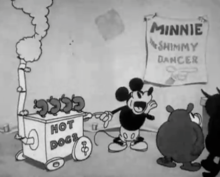
Today on 1929, the Walt Disney Studio released the animated short film The Karnival Kid, the first in which Mickey Mouse speaks. During his first eight appearances Mickey whistled, laughed, cried and otherwise vocally expressed himself. Mickey’s first spoken words were “Hot Dogs!” “Hot Dogs!”

Posted in Film, This day in information | Leave a comment

Pac-Man Released

Today in 1980, the arcade game Pac-Man was first released in Japan. Immensely popular from its original release to the present day, Pac-Man is considered one of the classics of the medium, virtually synonymous with video games, and an icon of 1980s popular culture. Pac-Man succeeded by creating a new genre and appealing to both genders. Pac-Man is often credited with being a landmark in video game history, and is among the most famous arcade games and one of the highest-grossing video games of all time.

Posted in This day in information, Video Games | Leave a comment

From the Archives: Bob Metcalfe Gives Birth to the Ethernet

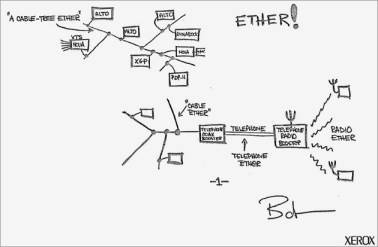
Today in 1973, twenty-seven-year-old Bob Metcalfe turned on his IBM Selectric, “pulled out a wad of Ko-Rec-Type, snapped on an Orator ball, and banged out the memo inventing Ethernet,” (from Internet Collapses) at Xerox Palo Alto Research Center (PARC).   As Metcalfe explained to Scott Kirsner years later in a Wired interview: “That is the first time ethernet appears as a word, as does the idea of using coax as ether, where the participating stations, like in AlohaNet or Arpanet, would inject their packets of data, they’d travel around at megabits per second, there would be collisions, and retransmissions, and back-off.” 

Today, Metcalfe is Professor of Innovation and Murchison Fellow of Free Enterprise at the University of Texas at Austin and hundreds of millions of Ethernet ports are shipped annually (counting WiFi).

Posted in Computer history, This day in information | 4 Comments

50 Years of Memory Management

50 years ago today, one of the first software patent applications is filed by the British Petroleum Company. It proposes to “solve automatically a linear programming problem by means of an iterative algorithm whereby it (a) transfers data representations from the slow-access to the quick-access storage, (b) transfers a suitable portion of data representations, as it becomes available by transference as specified in (a), back and forth, without intermediate transfer to slow-access storage, between the quick-access storage and the arithmetic unit where the portion is processed in accordance with at least two iterations of the iterative algorithm during at least one performance of process (b), and (c) returns the processed portion to slow-access storage.”

Posted in Computer history, Information storage, Memory, Patents, This day in information | Leave a comment

From the Archives: The IBM 701 and Software-as-a-Service

Sixty years ago today, the IBM 701 was formally announced.  Its official name was the Defense Calculator, “specifically selected to appeal to the patriotism of the older Watson and to avoid the use of the unacceptable word, computer,” according to Emerson Pugh in Building IBM.   Continue reading

Posted in Computer history, IBM, This day in information | Leave a comment