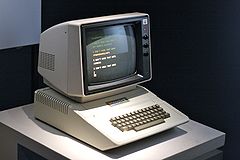
Dead Media: My First PC!

Old-Computers.com description of the Osborne Executive

Posted in Computer history, Dead media | Leave a comment

Why People Like to Read

Source: Pew Internet

Posted in Books, ebooks, Reading | Leave a comment

Mobile Payments: Present and Future

Pew Internet: The Future of Money in a Mobile Age

“Recent Pew Internet surveys find that one in ten Americans have used their cell phone to make a charitable contribution by text message, that more than one-third of smartphone owners have used their phones to do online banking services like paying bills or checking a balance, and that 46% of apps users have purchased an app using a mobile device.

Research from comScore has found that 38% of smartphone owners have used their cell phone to make a purchase of some kind, with digital goods (such as music, e-books or movies), clothing and accessories, tickets and daily deals leading the way as the most popular mobile retail categories. Continue reading

Posted in Mobile, Statistics | Leave a comment

35th Anniversary of the Apple II

Today in 1977, on the second day of the West Coast Computer Faire, Apple Computer formally introduced the Apple II.   Continue reading

Posted in Apple, Computer history, This day in information | Leave a comment

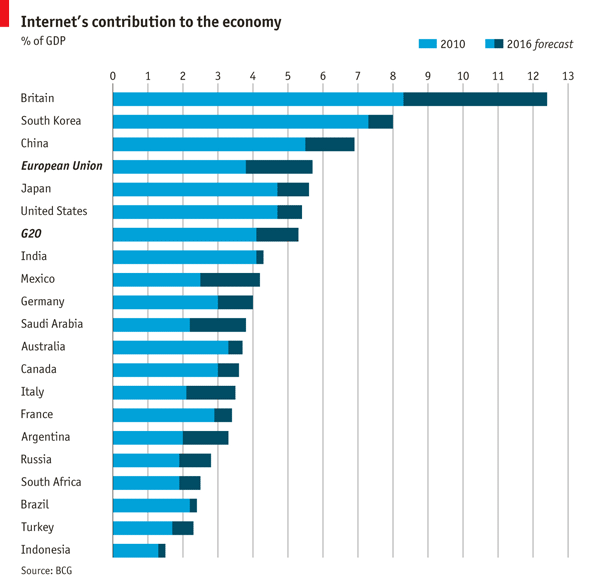
The Internet Economy: 5.3% of G20 GDP by 2016

The Economist: In the G20 countries, the internet economy will grow at more than 10% annually for the next five years and by 2016 reach $4.2 trillion, or 5.3% of GDP—up from $2.3 billion and 4.1% in 2010, according to a recent report by the Boston Consulting Group (BCG).

Posted in Information Economy, Internet Economy, Statistics, The InfoStory Quant | Leave a comment

Tipping Point for Internet Video vs. TV

According to Ypulse (via eMarketer), among high school and college students between the ages of 18 to 30, 70% reported watching Internet-streamed TV in a typical week, while 66% watched programs on a regular TV set. In contrast, among those aged 13 to 18, only 49% reported streaming television either to a computer or TV set on a weekly basis, while 76% said they watched TV on a regular set.

Posted in Internet Tipping Point, Internet video, Statistics, Television, The InfoStory Quant, Tipping points, Video | Leave a comment

The Increasing Diversity of Online Access

Pew Internet: The ways in which people connect to the internet are much more varied today than they were in 2000. As a result, internet access is no longer synonymous with going online with a desktop computer:

  • Currently, 88% of American adults have a cell phone, 57% have a laptop, 19% own an e-book reader, and 19% have a tablet computer; about six in ten adults (63%) go online wirelessly with one of those devices. Gadget ownership is generally correlated with age, education, and household income, although some devices—notably e-book readers and tablets—are as popular or even more popular with adults in their thirties and forties than young adults ages 18-29.
  • The rise of mobile is changing the story. Groups that have traditionally been on the other side of the digital divide in basic internet access are using wireless connections to go online. Among smartphone owners, young adults, minorities, those with no college experience, and those with lower household income levels are more likely than other groups to say that their phone is their main source of internet access
Posted in Digital Divide, Internet access, Statistics, The InfoStory Quant, World Wide Web | Leave a comment

The Internet of Things and People: Only Connect

The European Commission says that “the average person living within the 27-nation bloc has at least two devices connected to the net at present – typically a computer and smartphone. It expects the figure to rise to seven by 2015, with a total of 25 billion wirelessly connected to the net worldwide. By the end of the decade it says that could climb to 50 billion. ‘If a university teacher cancels a morning lecture because they are sick, students’ alarm clocks and coffee machines could automatically be reset,’ it gives as an example.”

Posted in Internet of things | Leave a comment

The Titanic Regulation

“At 10:25pm on Sunday, April 14, 1912, a single message borought wireless, Marconi, and evantually [David] Sarnoff to prominence: The Titanic, fastest and most luxurious ocean liner of its time, was sinking in the North Atlantic. The catastrophe would serve to make radio communications indispensable to safety at sea. … The Titanic‘s wireless distress call was heard fifty-eight miles away by the Marconi operator on the Carpathia, which enabled those in lifeboats to be rescued three and half hour later. But inadequate wireless installations on two other ships in the vicinity (which were in fact closer than the Carpathia) meant that the Titanic’s distress signal ‘CQD’ and the recently adopted ‘SOS’ went unheeded.”–Tom Lewis, Empire of the Air, 1991. Continue reading

Posted in This day in information, Wireless | Leave a comment

Harper Lee on Reading

From a letter to Oprah Winfrey Harper Lee wrote in 2006: “Do you remember when you learned to read, or like me, can you not even remember a time when you didn’t know how? I must have learned from having been read to by my family. My sisters and brother, much older, read aloud to keep me from pestering them; my mother read me a story every day, usually a children’s classic, and my father read from the four newspapers he got through every evening. Then, of course, it was Uncle Wiggily at bedtime. Continue reading

Posted in Books, Quotes, Social Impact | Leave a comment