The Penguin Takes Off

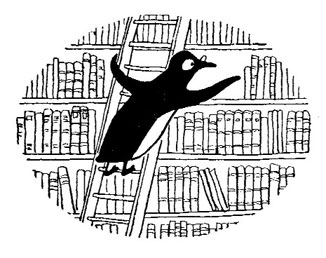
Today in 1935, the first ten Penguin Books, paperback reprints of titles previously published as hardbacks, are issued by publisher Allen Lane. Each title costs only sixpence each, the price of a pack of cigarettes, and all the titles feature the Penguin brand image and a standardized cover design. Within the first ten months, one million Penguin books had been printed. Continue reading

Posted in Books, This day in information | Leave a comment

The Eighth Wonder of the World Completed

Today in 1866, the Atlantic Cable was successfully completed. The first working cable, completed in 1858, failed within a few weeks. Before it did, however, it prompted the biggest parade New York had ever seen and accolades that described the cable, as one newspaper said, as “next only in importance to the ‘Crucifixion.'”  Steven Lubar in InfoCulture: “For merchants fresh news meant the difference between profit and loss… Information was the key, and more and fresher information was better. These merchants lived in an Information Age. Their hopes and fears and expectations and beliefs about the new information technology were, in some ways, not too far removed from ours.”

Posted in Telegraph, This day in information | Leave a comment

Fresh Data (from Pew) on the Rise of Video


Video-sharing site usage over time: 2006 - 2011

Posted in Statistics, Video | Leave a comment

Yeats Lost and Found at Boston College

Young Yeats by J.S. Sargent

When he was just 18 or 19 years old, in 1884, Yeats wrote a play titled “Love and Death.’’  The work was hidden among boxes of his journals, notebooks, and correspondence purchased by Boston College in 1993 from Michael Yeats, the poet’s son. It languished in obscurity until last year, the Boston Globe reports, when university librarian Tom Wall formed a committee to scour the Chestnut Hill institution’s archives for “high impact’’ candidates for digitization – the process by which works on paper are photographed, transcribed, and made accessible by computer.

Jane Morris, BC’s scholarly communication librarian: “It’s more than a trend. This is the new work of libraries, to make these things digital and available and discoverable, instead of having them closed off to the lucky few who have the means to travel here.’’


Posted in Digitization, Libraries, Preservation | Leave a comment

The Birth of the Integrated Circuit

Today in 1958, Jack Kilby sketched a rough design of the first integrated circuit in his notebook. By the early 1960s, some computers had more than 200,000 individual electronic components–transistors, diodes, resistors, and capacitors–and connecting all of the components was becoming increasingly difficult. Continue reading

Posted in Computer history, This day in information | Leave a comment

Typographer Invented

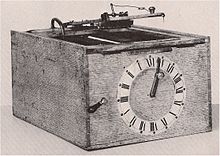
Today in 1829, William Austin Burt, a surveyor from Mount Vernon, Michigan, received a patent for the typographer, the earliest forerunner of the typewriter. Fifty years ago this month (July 31), IBM introduced the IBM Selectric, replacing typebars and the moving carriage with a spherical printing element.

Continue reading

Posted in IBM, Social Impact, This day in information | Leave a comment

Man’s Best Friend: On the Night Stand and the Web

“The dog padded along beside him in blissful anticipation. It is lovely to be going home. And whenever she was a few yards ahead of her master, she would halt and look back at him with eyes full of an unwavering faith, then return to him in a big curve. Her reverence for her master was so great that she did not presume even to walk ahead of him. A dog finds in a man the things it looks for. Continue reading

Posted in Quotes | Leave a comment

A Robot in Every Home?

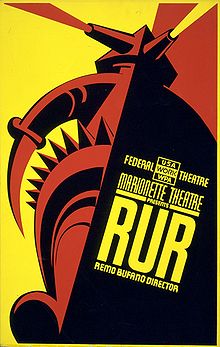
A 1939 poster for Karel Čapek's play, R.U.R. (1921) in which he coined the word "Robot"

Today in 1984, a factory robot in Jackson, Michigan, crushed a 34 year-old worker in the first ever robot-related death in the United States.  The robot thus violated Issac Asimov’s First Law of Robotics, “A robot may not injure a human being or, through inaction, allow a human being to come to harm,” first articulated in 1942.  Today, Robots have gone beyond the factory and thousands of Kiva Systems cute orange Robots safely run around warehouses fulfilling our online orders. Three years ago, “Roboticist” Rodney Books predicted: “[In the 1950s, when I was born] there were very few computers in the world, and today there are more microprocessors than there are people. Now, it almost seems plausible that in my lifetime, the number of robots could also exceed the number of people.” He must have had in mind some specific catalysts that will cause rapid acceleration in the proliferation of Robots — at that time (2008), the world’s Robot population stood at 8.6 million. Growth catalysts such as South Korea’s plan to put a Robot in every home by 2020.

Posted in Artificial Intelligence, Predictions, Quotes, This day in information | Leave a comment

The Break-Up of the Hollywood Monopoly

“Every spring scores of salesmen roar out of 31 U. S. cities to sell some 17,000 theatre owners a full year’s supply of films (100 to 300 per theatre), sight unseen. They do not sell the films by name, since none has been completed and only a few planned. Instead they sell their studio’s reputation. From the poke sticks a real pig’s ear or two, a few guaranteed bristles: ‘three Gables, four Rooneys, two Mervyn LeRoy specials,’ etc. To get these, an exhibitor must buy a full schedule of unknowns, many of which will prove to be not pigs but turkeys. This is the system known as block booking and blind selling.” Continue reading

Posted in Film, This day in information | Leave a comment

Tipping Point for the Internet of Things and Connected Cows

In 2008, the number of things connected to the Internet exceeded the number of people on Earth. This according to a Cisco Infographic on the Internet of Things today and tomorrow. One Internet of Things start-up it mentions is Sparked, a Dutch company which developed sensors that are implanted in a cow’s ear.  The data, transmitted wirelessly, is then used by the farmer to determine the health of individual cows as well as the herd. Much is also learned about fluctuations in diet, a cow’s response to environmental factors, and herd behavior. Continue reading

Posted in Internet of things, Libraries, Predictions, Tipping points, Wireless | 3 Comments