The crossword puzzle at 100: “A primitive form of mental exercise” according to the New York Times

The First Crossword Puzzle

The First Crossword Puzzle

Today in 1913, journalist Arthur Wynne published the first crossword puzzle in the New York World. According to Jen Carlson, a New York Times editorial in 1924 called it “a primitive form of mental exercise.” See also NPR’s “100 Years Of Solvitude” and the Atlantic’s interview with Deb Amlen, writer of Wordplay, the official crossword blog of The New York Times.


Posted in This day in information | Leave a comment

Steve Jobs Introduces Macintosh to BCS, January 1984 (Video)

January 1984: This is a brief clip of Steve Jobs speaking with Boston Computer Society members as he makes the first public showing ever of Macintosh. Steve Wozniak and the designers of Macintosh join with Steve in a very lively demo of a revolutionary breakthrough in personal computing.

Posted in Apple, Computer history | Leave a comment

The Evolution of the Camera,1888-2013 (Infographic)

Cameras

Source: Pop Chart Labs

HT: Fast Company


Posted in Digitization, Photography | Leave a comment

Robotics and the Birth of Silicon Valley

William Shockley, 1963

William Shockley, 1963

“The life of William Shockley—Nobel Prize winner, inventor of the junction transistor, and founder of the seminal silicon electronics laboratory—has been well chronicled. But recently, while digging through the Shockley archives at Stanford University, researcher David C. Brock made a shocking discovery: As early as 1951, Shockley had his heart and his tremendous technical acumen set on creating a robotic workforce. According to Brock, it was Shockley’s unyielding but ultimately unsuccessful push to field an automaton army that set the stage for the Silicon Valley we know today. The “men of imagination and initiative” that he brought together—including Moore, Noyce, Hoerni, Kleiner, and Last—soon took silicon electronics in new directions, spurring the creation of countless new tech companies that produced a dizzying number of advances.”

Read more at IEEE Spectrum

Posted in Automation, Business history, Computer history, Robots, Social Impact | Leave a comment

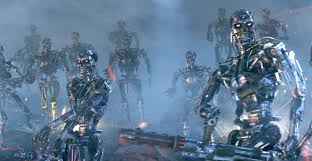
The Rise of The Machines, 1947

RiseOfMachines“Three key factors shaped the production operations design of [Ford’s] Cleveland Engine Plant. The first was the decision that Delmar Harder made in April 1947 to organize an Automation Department within his Manufacturing Division. Harder charged the new unit’s engineers and production experts with the development of relatively inexpensive, reliable methods of automating the transfer of materials in process from one operation to another. His instructions were to design and install such “automation” devices if the cost of each device were less than $3000 (or roughly ten to fifteen percent over the annual wages of an average, fully employed blue collar worker in the automobile industry at the time). Payback for these devices had to be in one year. Thus, for all intents and purposes, to be viable each automation device had to eliminate at least one worker.”

David A. Hounshell, “Ford Automates: Technology and Organization in Theory and Practice,” Business and Economic History, Fall 1995

Note: The first published mention of “automation” in the sense of “The action or process of introducing automatic equipment or devices into a manufacturing or other process or facility” listed in the Oxford English Dictionary is from American Machinist, October 21, 1948.

Posted in Automation | Leave a comment

Most Popular Toys from the Last 50 Years (Infographic)

50 Years 50 Toys

Explore more infographics like this one on the web’s largest information design community – Visually.


Posted in consumer electronics history, Infographics | Leave a comment

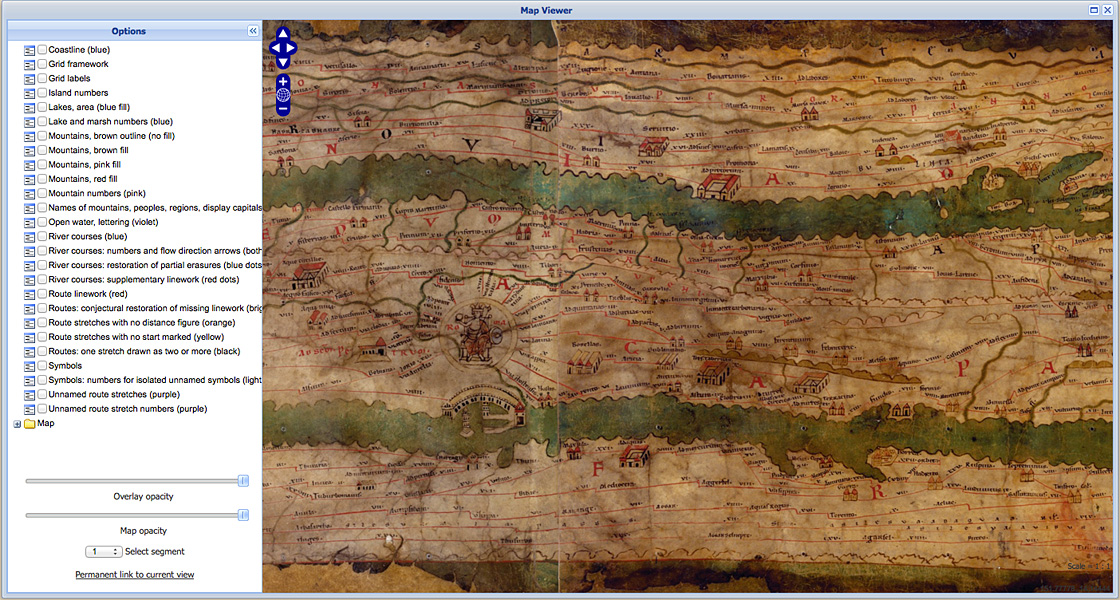
The only Roman world map known to have survived antiquity

MapRoman


The so-called “Peutinger Map” is the only Roman world map known to have survived antiquity. Preserved in a single, medieval copy now housed in the Austrian National Library in Vienna, the map stretches from Britain in the west to India in the east, covering a series of 11 parchment rectangles totaling over 6.7 meters (22 feet) in length.

In preparing his 2010 book on the subject (Rome’s World: The Peutinger Map Reconsidered; Cambrige UP), Richard Talbert collaborated with the staff of the Ancient World Mapping Center at UNC Chapel Hill and with ISAW’s Digital Programs team to produce digital tools that were used to record and analyze the map. These have been published online so that students and scholars can verify his findings and form their own impressions of the map and its content. These include:

From the exhibition Measuring and Mapping Space: Geographic Knowledge in Greco-Roman Antiquity at the Institute for the Study of the Ancient World


Posted in Maps | 1 Comment

Origins of Common Symbols (Infographic)

OriginsofCommonUISymbols

Source: Sofya Yampolsky

Posted in History, Infographics | Leave a comment

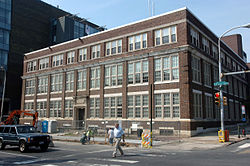
First Computer Science PhD

Moore School of Electrical Engineering at the University of Pennsylvania

Moore School of Electrical Engineering at the University of Pennsylvania

Today in 1965, the University of Pennsylvania awarded Richard L. Wexelblat a Ph.D. in computer science. Many Ph.D. candidates had performed computer-related work before, but Wexelblat’s diploma was the first one to carry the designation “computer science.”

Posted in Computer history | Leave a comment

7 Stats About the Internet

7 Shocking Stats & Trends About the Internet Infographic | Staff.com
Staff.com – Connecting Great Companies with Global Talent

Posted in Infographics, Internet | Leave a comment