Libraries without Books?

Banished Books at the Princeton Science Library

Banished-to-the-Basement Books at the Princeton Science Library

The just-released Pew Internet national survey on Library Services in the Digital Age found that

people have different views about whether libraries should move some printed books and stacks out of public locations to free up space for tech centers, reading rooms, meeting rooms, and cultural events: 20% of Americans ages 16 and older said libraries should “definitely” make those changes; 39% said libraries “maybe” should do that; and 36% said libraries should “definitely not” change by moving books out of public spaces.

See also Library Models in Time and Space

Posted in Digitization, Libraries, Stats | Leave a comment

Key Technology Trends in Education in 2013

Social media, 3D printing, online courses, eBooks and other information technologies to impact education in 2013:

Continue reading

Posted in 3D printing, Digitization, ebooks, Education, social media | 1 Comment

Unprepared for College

  • – At the time of graduation, nine in ten American high school graduates cannot identify Afghanistan on a map of Asia
  • – Three in ten cannot find China—the biggest country in the world—on a globe
  • – Roughly half cannot find New York state on a U.S. map

As a result of these and other findings, more than 2.2 million college freshman must take remedial courses that teach high school material during their first year in college in order to catch up with their peers. Taxpayers shell out $5.6 billion for these remedial courses. To put that figure into perspective, if differently allocated, that money could pay for 175,000 students to attend four years of college.

Continue reading

Posted in Education, Stats | Leave a comment

George Orwell Day, January 21

Orwell, 1933

Orwell, 1933

“If liberty means anything at all, it means the right to tell people what they do not want to hear”

“Men can only be happy when they do not assume that the object of life is happiness”

“Political language – and with variations this is true of all political parties, from conservatives to anarchists – is designed to make lies sound truthful and murder respectable, and to give an appearance of solidity to pure wind”

“We are all capable of believing things which we know to be untrue, and then, when we are finally proved wrong, impudently twisting the facts so as to show that we were right”

“There are some ideas so absurd that only an intellectual could believe them”

Posted in Quotes, This day in information | Leave a comment

2013: The International Year of Statistics

Source: www.statistics2013.org

Posted in Statistics | Leave a comment

Apple Introduces Lisa: “Great Artists Steal”

Lisa and team

Lisa and team

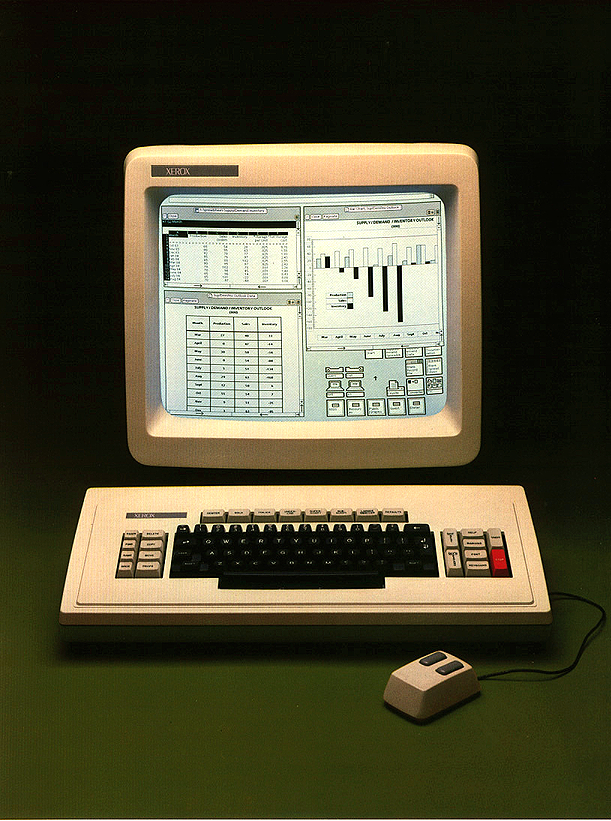
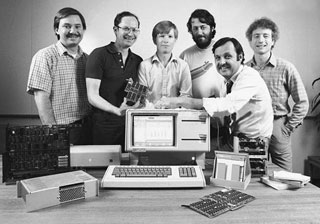
30 years ago today, Apple introduced Lisa, a $9,995 PC for business users. Many of its innovations such as the graphical user interface, a mouse, and document-centric computing, were taken from the Alto computer developed at Xerox PARC, introduced as the $16,595 Xerox Star in 1981. Jobs recalled that he and the Lisa team were very relieved when they saw the Xerox Star: “We knew they hadn’t done it right and that we could–at a fraction of the price,” according to Walter Isaacson’s Steve Jobs

Xerox Star

Xerox Star

“The Apple raid on Xerox PARC is sometimes described as one of the biggest heists in the chronicles of industry,” says Isaacson, who quotes Jobs on the subject:  “Picasso had a saying–‘good artists copy, great artists steal’–and we have always been shameless about stealing great ideas… They [Xerox management] were copier-heads who had no clue about what a computer could do… Xerox could have owned the entire computer industry.” Says Isaacson: “…there is more to it than that… In the annals of innovation, new ideas are only part of the equation. Execution is just as important.” True, but given that Lisa didn’t become a commercial success, “execution” obviously means much more than “getting the product right.”

See also: Thomas Edison and Steve Jobs, Creating New IndustriesWYSIWYG, Mouse CommercializedFumbling the Future, Inventing the Present, Understanding the Past

Posted in Apple, Computer history, Innovation, The Year in Information, Xerox | Leave a comment

Aaron Swartz and the Open Library

Aaron Swartz talks (in 2007) about the open library, “one web page for every book ever published.”

Posted in Uncategorized | Leave a comment

Patent for Multiple Telephone Switchboards Granted

Swtichboard_multiple patentToday in 1882,  U.S. Patent No. 252, 576  for a “a new system for multiple [telephone] switchboards” was granted to Leroy B. Firman.

For more on telephone switchboards, see here and here and here.

Posted in Automation, Patents, Telephone | Leave a comment

SAGE Revealed

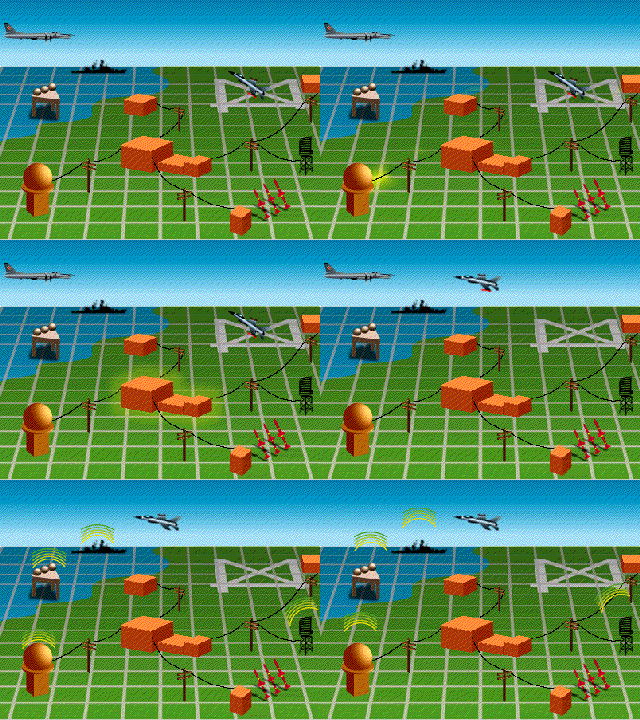
SAGEToday in 1956, the development of the Semi-Automatic Ground Environment (SAGE), is disclosed to the public. From MITRE’s website: “Looking back at the development of the computers supporting the SAGE, the origins of many key computer innovations are readily apparent. SAGE’s use of telephone lines to communicate from computer to computer and computer to radar laid the groundwork for modern-day modems… Bob Everett’s invention of the light gun is often referred to as one of the precursor’s to today’s computer mouse. Whirlwind‘s control program, the largest real-time computer program written at that time, spawned a new profession, software development engineers and programmers. SAGE2

Many other computer breakthroughs such as magnetic-core storage, modular design, interactive graphic displays, on-line common databases, and continuous and reliable operation can also be traced to the development of Whirlwind. In addition, software innovations like the ability to accommodate multiple, simultaneous users, the use of advanced data system structures, structured program modules, and global data definitions grew out of SAGE’s development.”


Posted in Computer history, This day in information | Leave a comment

564 Million Internet Users in China, 42.1% Penetration

China-internet-users-stats-for-2012


China’s web registry regulator, the CNNIC, today released data showing that China had 564 million internet users at the end of 2012, meaning that web penetration is 42.1%,  up from 8.5% in 2005.

Source: Tech in Asia

Posted in China, Internet, Internet access, Stats, The InfoStory Quant | Leave a comment