The Empirical Lexicographer

Lexicographer: A writer of dictionaries; a harmless drudge, that busies himself in tracing the original, and detailing the signification of words–Samuel Johnson

After we came out of the church, we stood talking for some time together of Bishop Berkeley’s ingenious sophistry to prove the non-existence of matter, and that every thing in the universe is merely ideal. I observed, that though we are satisfied his doctrine is not true, it is impossible to refute it. I never shall forget the alacrity with which Johnson answered, striking his foot with mighty force against a large stone, till he rebounded from it, ‘I refute it thus.’–James Boswell, Life of Samuel Johnson

Posted in Dictionaries, Language, Quotes, Science | Leave a comment

The Web Oscarized

Today in 1997 was the first year of the annual Webby Award event, which was the first-ever nationally televised awards ceremony devoted to the Internet. 700 people attended the event at Bimbo’s Night Club in San Francisco. Also today, Queen Elizabeth II launched the first official royal website and The Bonny View Cottage Furniture company registered the one millionth Internet domain name. By December 2009 there were 192 million domain names, a number growing to 84 million by March 15, 2010.

Posted in This day in information, World Wide Web | Leave a comment

“Homebrew and How the Apple Came to Be”

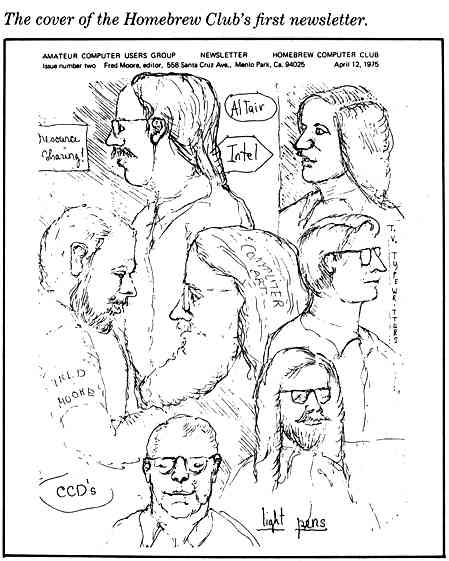
The cover of the club's first newsletter

Today in 1975, the Homebrew Computer Club met for the first time. Wikipedia: “Several very high-profile hackers and IT entrepreneurs emerged from its ranks, including the founders of Apple Inc. The short-lived newsletter they published was instrumental in creating the technological culture of Silicon Valley…  It was started by Gordon French and Fred Moore who met at the Community Computer Center in Menlo Park. They both were interested in maintaining a regular, open forum for people to get together to work on making computers more accessible to everyone.” Continue reading

Posted in Apple, Computer history, PCs, This day in information | Leave a comment

Maps and Wars

In 1748, the first systematic national topographical survey in France (and the first of its kind in Europe) culminated in the publication of the 182-sheet Carte geometrique de la France. On inspection, Louis XV remarked that the more accurate data captured in the survey resulted in a “loss” of more territory than his wars of conquest had gained. This survey work “established the basic principles of national mapping which are still employed throughout the world today,” says the Library of CongressContinue reading

Posted in Digitization, Google, Maps, Social Impact | Leave a comment

The Rights of Photographs

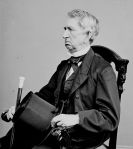
William H. Seward, U.S. Secretary of State

Today in 1865, photographs and photographic negatives were added to protected works under U.S. copyright law.

Posted in Uncategorized | Leave a comment

Computers and Health Care

“The development of our information processing industry is basically governed by longer term super-cycles… Analyses of what computational environments will facilitate can be mind-boggling. To offer just one example, health care delivery will be revolutionized by 1990, with most large metropolitan areas having implemented vertically-integrated health facilities coordinated by computer… [including] physicians’ offices, neighborhood health care centers, hospitals, university medical centers, nursing homes, rehabilitation centers and home health care”–Gideon Gartner, 1978 Continue reading

Posted in Forecasts, Healthcare, Predictions, Quotes | Leave a comment

The First U.S. Census

Today in 1790 Congress passed the Census Act of 1790 and President George Washington signed the law, which authorized the collection of population data by U.S. Marshals.  Although the act included the specific inquiries marshals asked at each home they visited, they did not receive printed forms on which to record the data.  Marshals used their own paper and designed their own forms — a practice followed until the U.S. government began supplying printed census schedules in 1830. Continue reading

Posted in Censuses, This day in information | Leave a comment

Arithmetic, Then and Now

“Our youth, proficients in a noble art

Divide a farthing to the hundredth part.

Well done, my boy, the joyful father cries,

Addition and Subtraction make us wise.”–Oliver Oldschool, 1801*

“The different branches of Arithmetic — Ambition, Distraction, Uglification, and Derision. “–Alice in Wonderland Continue reading

Posted in Quotes | Leave a comment

From the Dead Media Archives: Laserdisc

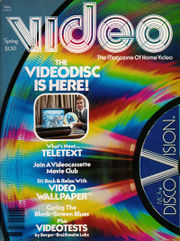
Early optical Laserdisc technology was invented by David Paul Gregg in 1958. By the time Gregg had patented his transparent videodisc system in 1961 and again in 1969 he decided to sell the patents to electronics manufacturer Philips. Philips had already been working on a reflective videodisc system at the time and gaining ownership of Gregg’s invention helped them push technology forward. Philips’ main goal with the Laserdisc was to sell feature films on them to consumers, so they teamed up with MCA, an entertainment company that owned the rights to the largest catalog of films at the time, to bring the Laserdisc technology to market. Collaboratively, Philips and MCA demonstrated the technology in 1972 and made it available for consumers on December 15, 1978. Philips manufactured the hardware players and MCA made the discs. The format went by many names including DiscoVision, but most referred to it as Laserdisc.

Posted in Dead media, Film, Video | Leave a comment

Magnetic Core Memory Patented

Today in 1956, Jay Forrester of MIT was awarded a patent for his magnetic core memory. It became the standard for computer memory until it was supplanted by solid state RAM in the mid-seventies. It has continued to be used, however, in special environments (e.g., on the space shuttle), because its content was not lost when the power was shut off. Continue reading

Posted in Computer history, Information storage, Innovation, Memory, This day in information | Leave a comment