Radar Invented

Arnold Wilkins' (Watson-Watt's assistant) sketch of the Daventry experiment

Today in 1935, Scottish physicist Robert Watson-Watt demonstrated in Daventry, England, that radio waves could be reflected by an aircraft. The experiment, prompted by fears of the development of death rays by Germany, launched a research program into what later will be called by the US Navy radar, for RAdio Detection And Ranging.

According to Robert Buderi, in The Invention that Changed the World, Watson-Watt said in reaction to the success of the demonstration, “Britain has become an island once more.” 

Continue reading

Posted in Innovation, Radar, Radio, This day in information | 2 Comments

From Analog to Digital: Film and Music

Today in 2007, Netflix announced its billionth DVD delivery. Today, with more than 23 million streaming members globally, Netflix claims it is “the world’s leading Internet subscription service for enjoying movies and TV shows.”

Today in 2010, Apple announced that it has sold the ten billionth song through its iTunes Store (launched in 2003) and on July 31, 2007, it announced that it has sold 2 million feature-length films through iTunes. By the way, the iTunes App Store is about to hit 25 billion downloads. Here’s the countdown.

Posted in Apple, Data growth, Digitization, Film, music, Netflix, This day in information | Leave a comment

From Analog to Digital: Bank Checks

Today in 1925, New York banker, George McCarthy received a patent for the Checkograph, the first bank check photographing device and the first practical use of commercial microfilm.

In 1928 Eastman Kodak bought McCarthy’s invention and began to market it under Kodak’s Recordak Division. With a perfected 35mm microfilm camera, Recordak in 1935 expanded and began filming and publishing The New York Times in microfilm. Continue reading

Posted in Computer history, Data growth, Digitization, Imaging, Paper, This day in information | 1 Comment

We Are What We Remember

“Memory is the power to revive again in our minds those ideas which after imprinting have disappeared, or have been laid aside out of sight”–John Locke

“Memory is a process by which what is learned persists across time”–Larry Squire and Eric Kandel, Memory: From Mind to Molecules, 1999

“Memory is what we are ultimately made of. That memory needs an organization that comes from our personal vision – eyes with thoughtful filtering lenses, ears with our own frequency, and finally, brains of Velcro tuned to our personal interest connections”–Richard Saul Wurman, Information Anxiety2, 2001 Continue reading

Posted in Memory, Quotes | 3 Comments

A Calculating People

Congress assigned responsibility for the 1790 census to the marshals of the U.S. judicial districts under an act that, with minor modifications and extensions, governed census-taking through 1840.

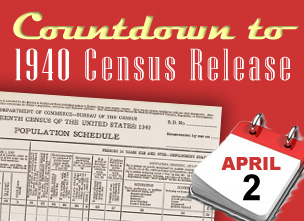
On April 2, 2012, the National Archives and Records Administration will make individual records from the 1940 Census available to the public for the first time. “The 1940 Census was conducted during a momentous time in our nation’s history, as the Great Depression was winding down and not long before our entry into World War II (although the war was already raging in Europe). It marked the only census conducted during the lengthy presidency of Franklin D. Roosevelt. It was also notable for many other reasons, as detailed below.” Continue reading

Posted in Censuses | 2 Comments

Education Spoiled, Purpose Lost

“Most people are mirrors, reflecting the moods and emotions of the times; few are windows, bringing light to bear on the dark corners where troubles fester. The whole purpose of education is to turn mirrors into windows.”–Sydney J. Harris, journalist and author (1917-1986).

Don Hewes [Fred Astaire]: “Aha, that’s the trouble with college—you’ve been reading books! [Raises his glass] There’s more sense in one of these than in a whole library, right Mike?”

Mike [the bartender]: “Oh, education is all right; it’s the people who spoil it.”

–Easter Parade, 1948.
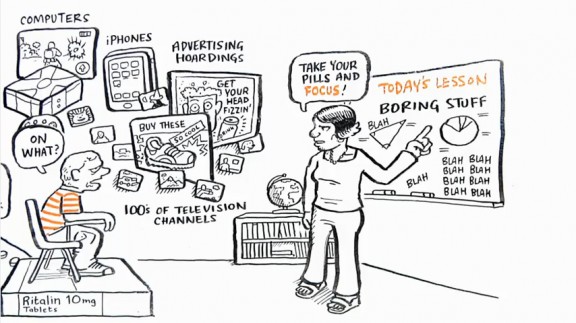
“For a decade, the Bush-era federal law called No Child Left Behind has required the nation’s public schools to test every student in grades 3-8 in reading and mathematics. Now, the Obama administration is pressuring the states to test every grade and every subject. No student will be left untested. Every teacher will be judged by his or her students’ scores. Cheating scandals will proliferate. Many teachers will be fired. Many will leave teaching, discouraged by the loss of their professional autonomy. Who will take their place? Will we ever break free of our national addiction to data? Will we ever stop to wonder if the data mean anything important? Will education survive school reform?”–Diane Ravitch, The New York Review of Books

Posted in Education, Quotes, Social Impact | Leave a comment

Instant Photography

Life Magazine, October 1972

Today in 1947, Edwin H. Land demonstrated the first instant camera, the Polaroid Land camera, during a meeting of the Optical Society of America. Land started thinking about an instant camera a few years earlier when his 3-year-old daughter asked him why can’t she see immediately the picture he had taken of her. Four million Polaroid cameras were sold from 1948 to 1962. At the end of last year, Polaroid had introduced  the Z340 Instant Digital Camera, a 14MP digital camera with an integrated ZINK-enabled printer.

Posted in Photography, This day in information | 2 Comments

Phone Booth Library

From Alltop: Architect John Locke wanted to give forgotten phone booths a purpose again, so he transformed an antiquated call box in New York City into a bookshelf. Part of Locke’s “Department of Urban Betterment,” the project encourages reading and sharing through its communal library style

Posted in Libraries, Telephone | Leave a comment

Watching the Mail, the New Reality

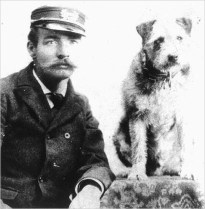
Owney was a mongrel dog who became the mascot of the Railway Mail Service. He traveled on mail trains all through the United States in the 1890s and even made a trip around the world on mail steamers in 1895.

“When you control the mail, you control information.”–Mail carrier Newman, Seinfeld

Today in 1972, George Washington signed the Post Office Act, creating the United States Postal Service.

Railway Mail clerks considered Owney a good luck charm. Whenever he rode on a train, no one in the mail car was ever hurt in an accident during the trip.


In 2011, the USPS delivered 168 billion pieces of mail, down from 202 billion in 2008.

Posted in Post Office, Quotes, This day in information | Leave a comment

Be Careful What You Ask For

“It is a very sad thing that nowadays there is so little useless information.”—Oscar Wilde

“There is no way I’m going to let these simian creatures defeat me. While they’re sleeping, I’m processing countless terabytes of useless information.”—IBM’s Watson (Jeopardy Champion)

“You know those little factoids that float around your brain – odd little pieces of information… these nuggets of know-how aren’t useless at all; they’re awesome assets that could win you the envy of your peers, and maybe even some money in an all stakes in trivia game.”—WCVB TV Boston

Posted in Quotes | Leave a comment