
Today in 1979, Allan McLeod Cormack and Godfrey Newbold Hounsfield won the Nobel Prize for medicine for developing the theory and technology behind CAT scans.
-
Join 186 other subscribers
Categories
Archives
Today in 1979, Allan McLeod Cormack and Godfrey Newbold Hounsfield won the Nobel Prize for medicine for developing the theory and technology behind CAT scans.
“The world will not have such a talent again in a hundred years!… I was quite besides myself for a long while because of his death, and could not believe that Providence would have so rapidly dispatched an irreplaceable man to the other world.”
–Joseph Haydn, reacting to news about Mozart’s death, December 1791
Good alerts us to The Deleted City, “a digital archaeology of the world wide web as it exploded into the 21st century.” Continue reading
The fast pace of technology’s advance has left some data behind as data stored on tapes, floppy disks, and other media that is now unreadable by modern computers is essentially lost. In addition, file formats change as new programs are developed, making older programs obsolete. To help save this lost data, Harvard University’s Institute for Quantitative Social Science (IQSS) is leading the Dataverse Network Project, which provides archival storage for scientific research projects. IQSS provides professional archiving standards designed to ensure future access to data. Once a researcher’s data is entered into the system, it is converted from its original file format into a basic one that ensures the information will remain readable for decades. When that format becomes obsolete, the system will automatically convert the data to a new format that also is designed to last for decades, says IQSS director Gary King. The institute currently hosts more than 350 individual researchers’ Dataverses, which includes about 40,000 studies and 665,000 files, according to IQSS’ Merce Crosas. The software’s open source design allows other researchers to add features that can be shared with the community of users.–Alvin Powell, “Data May Not Compute,” Harvard Gazette, September 16, 2011
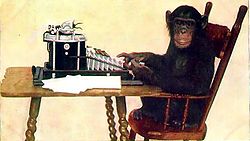 In 1996, Robert Wilensky famously said: “We’ve heard that a million monkeys at a million keyboards could produce the complete works of Shakespeare; now, thanks to the Internet, we know that is not true.” Continue reading
 Today in 1997, Apple Computer launched the “Think different” marketing campaign. The campaign’s television commercials featured black-and-white footage of 17 iconic 20th century personalities and a free-verse poem read by Richard Dreyfuss: Continue reading
“The Kinze Autonomy Project, [is] a new set of tractor and grain cart unveiled this Summer that drive themselves to harvest crops and that can make ‘intelligent operational decisions in real time based on field conditions.’ Continue reading
“Google+ is Google itself. We are extending it across all that we do–search, ads, Chrome, Android, Maps, YouTube–so that each of those services contributes to our understanding of who you are…. Continue reading
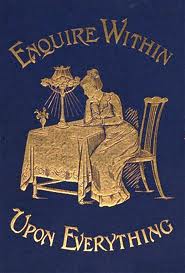 Today is the fifth annual OneWebDay, raising “awareness of the importance of maintaining the open-networking principles that have made it the success it is.” Tim Berners-Lee in Weaving the Web: “When I first began tinkering with a software program that eventually gave rise to the idea of the World Wide Web, I named it Enquire, short for Enquire Within upon Everything, a musty old book of Victorian advice I noticed as a child in my parents’ house outside London. With its title of suggestive magic, the book served as a portal to a world of information, everything from how to remove clothing stains to tips on investing money.” It also answers one still-burning question: “It would take 27,600 spiders to produce 1 LB. of Web.”
 The Story of Information