Automated Telephone Switching

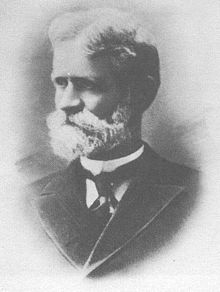
Almon_StrowgerToday in 1891, Almon Brown Strowger was issued a patent for his electromechanical switch to automate telephone exchanges. Steven Lubar in InfoCulture: “…a Kansas City undertaker, Strowger had a good practical reason for inventing the automatic switchboard. Legend has it that his telephone operator was the wife of a business rival, and he was sure that she was diverting business from him to her husband. And so he devised what he called a ‘girl-less, cuss-less’ telephone exchange.”

The first automatic switchboard was installed in La Porte, Indiana, in 1892, but they did not become widespread until the 1930s. Anticipating future reactions to some of the inventions of the computer age, shifting work to the users was not received enthusiastically by them. AT&T’s top-notch propaganda machine got over that inconvenience by predicting that before long, more operators would be needed than there were young girls suitable for the job.     Continue reading

Posted in AT&T, Automation, Bell Labs, Telephone, This day in information | 1 Comment

The Evolution of Web Hosting (Infographic)


Cloud Hosting Infographic Created by PEER 1 Hosting

Posted in Cloud Computing, Computer history, World Wide Web | Leave a comment

Technology in the Classroom

Teaching 2.0: Is Tech In The Classroom Worth The Cost? (Podcast)

TechClassroom“[Skype] enables me, as a writer based in New York, to get to places I’d otherwise never be able to get to. I’ve seen teachers completely dedicated to making their students interested, enthusiastic, energetic learners, and using this technology is just one of the tools to do that. This is not the panacea, and I don’t want to present it that way”–Kenneth C. Davis, author of Don’t Know Much About History


Findings from How Teachers Are Using Technology at Home and in Their Classrooms, a Pew Internet survey:    Continue reading

Posted in Education, Internet, Internet access, Social Impact, Statistics | Leave a comment

The Homebrew Club and the Birth of Apple

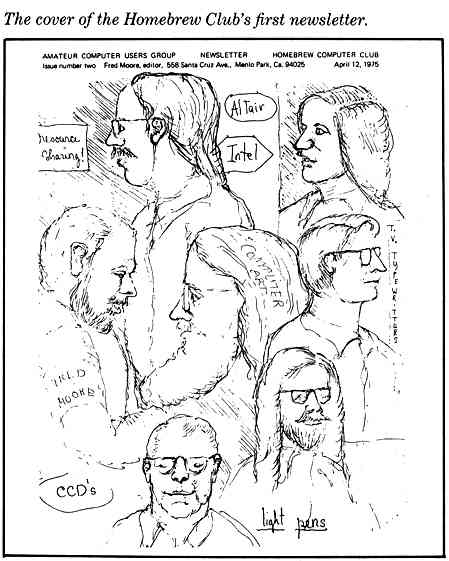
The cover of the club's first newsletter

The cover of the club’s first newsletter

Today in 1975, the Homebrew Computer Club met for the first time. Wikipedia: “Several very high-profile hackers and IT entrepreneurs emerged from its ranks, including the founders of Apple Inc. The short-lived newsletter they published was instrumental in creating the technological culture of Silicon Valley…  It was started by Gordon French and Fred Moore who met at the Community Computer Center in Menlo Park. They both were interested in maintaining a regular, open forum for people to get together to work on making computers more accessible to everyone.”

Steve Wozniak:   Continue reading

Posted in Apple, Computer history, Innovation | Leave a comment

First Photo Studio

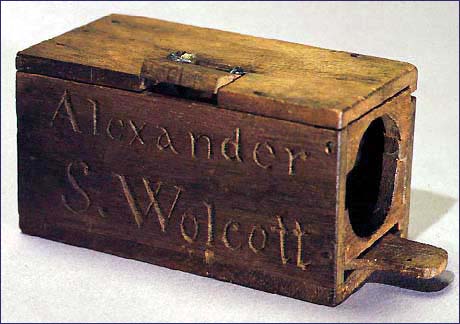
Wolcott_CameraToday in 1840, Alexander S. Wolcott and John Johnson opened the first commercial photography studio in New York.  Burton’s Gentleman’s Magazine described Wolcott as having “nearly revolutionized the whole process of Daguerre… [who] as is well known, could not succeed in taking likenesses from the life, and, in fact, but few objects were perfectly represented by him, unless positively white, and in broad sunlight. By means of a concave mirror, in place of ordinary lens, Mr. W. has succeeded in taking miniatures from the living subject, with absolute exactness, and in a very short space of time.”

In the years that followed, popular interest swelled and commercial studios proliferated. One commentary in the press, in 1843, described “beggars and the takers of likeness by daguerreotype” as the only two groups of people who made money in New York “in these Jeremiad times”: “It will soon be… difficult to find a man who has not his likeness done by the sun…”

By the early 1850s a visitor commented that “there is hardly a block in New York that has not one or more of these concerns [daguerreotype studios] upon it, and some of them a dozen or  more, and all seem to be doing a good and fair amount of business.”

Source: Jeff Rosenheim, “‘A Palace for the Sun’: Early Photography in New York City,” in Art and the Empire City, 2000


Posted in Photography, Social Impact, This day in information | Leave a comment

The Rights of Photographs

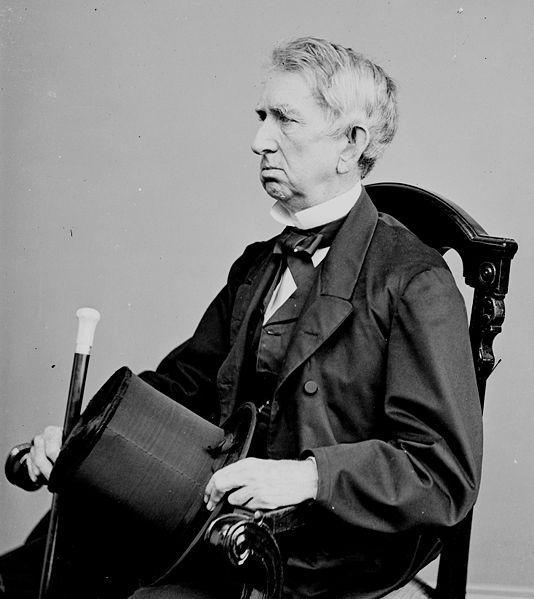
William H. Seward, U.S. Secretary of State

William H. Seward, U.S. Secretary of State

Today in 1865, photographs and photographic negatives were added to protected works under U.S. copyright law.

Posted in Law, Photography, This day in information | Leave a comment

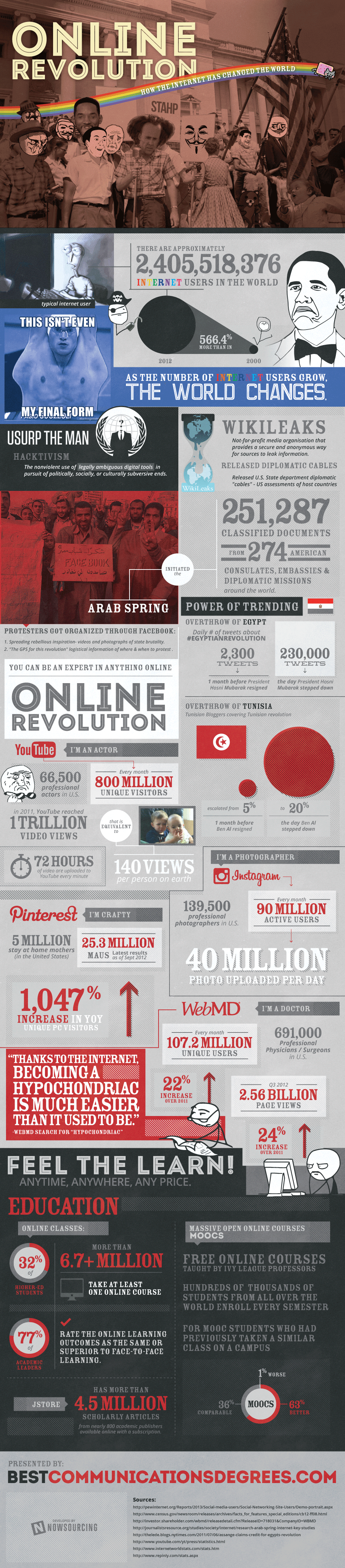
The Social Impact of the Internet

Internet_infograph

Posted in Economic Impact, Information Economy, Internet, Internet Economy, Social Impact, Stats, World Wide Web | Leave a comment

Birth of The Optical Telegraph

Chappe_telegrafToday in 1791, at 11 A.M., the Chappe brothers sent the message “si vous réussissez, vous serez bientôt couverts de gloire” (if you succeed, you will soon bask in glory) between Brulon and Parce, a distance of ten miles, over their optical telegraph, using a combination of black and white panels, clocks, telescopes, and codebooks.

Richard John in Network Nation: “The French optical telegraph relied on specially trained operators to relay coded messages along a chain of towers spaced at intervals of between 10 and 20 miles: the maximum distance by which an operator could interpret the signals using the telescopes of the day… The French optical telegraph had intrigued Morse ever since he had observed it first hand during a visit to France in the early 1830s… The superiority of the electrical telegraph over the optical telegraph was for Morse not only technical but also political. The medium was the message: the optical telegraph was monarchical, the electric telegraph republican… Unlike the optical telegraph, the electric telegraph was ‘more in consonant’ with the country’s civic ideals because, like the mail system, it could ‘diffuse its benefits alike’ to the many and the few.”

Posted in Social Impact, Telegraph, This day in information | Leave a comment

First U.S. Census and the Census of Occupations

census_random_samplingsToday in 1790 Congress passed the Census Act of 1790 and President George Washington signed the law, which authorized the collection of population data by U.S. Marshals.  Although the act included the specific inquiries marshals asked at each home they visited, they did not receive printed forms on which to record the data.  Marshals used their own paper and designed their own forms — a practice followed until the U.S. government began supplying printed census schedules in 1830.

Census Day was on the first Monday in August 1790 and was conducted under the supervision of Thomas Jefferson. Today, the law requires that the census be conducted on or about April 1, and every ten years after that.

Patricia Cline Cohen in A Calculating People: “Madison’s census of occupations [which he proposed for the 1790 census] would reveal the proportions of competing groups only if it were decided that agriculture, commerce, and manufacturing were in fact separable groups constituting the most meaningful distinctions in the social order. In 1820 that step was finally taken; the federal census of that year required that each household be labeled as belonging to one and only sector of the economy. The common good was being broken into constituent parts, and the social order could now be comprehended through arithmetic.”

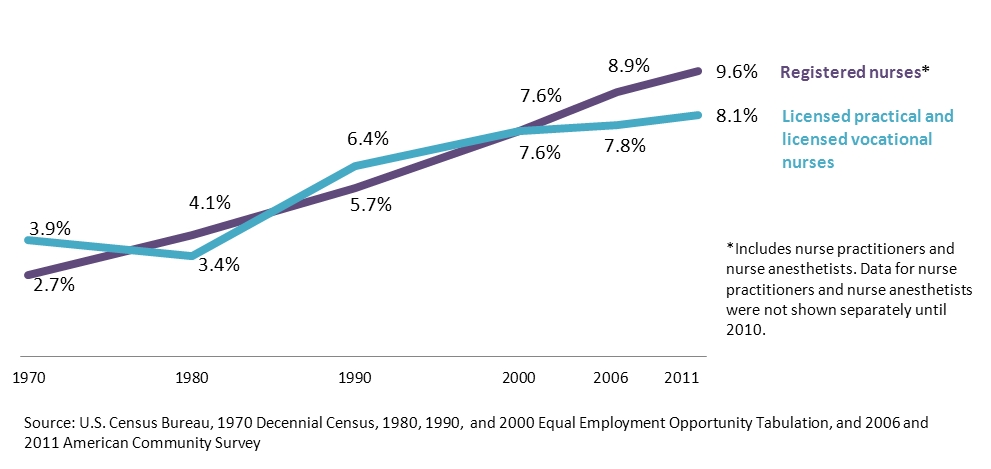
Today, the U.S. Census Bureau collects data on industry, occupation, and class of worker for Americans in the labor force on several surveys, the largest ones being The American Community Survey (ACS), the Current Population Survey (CPS), and the Survey of Income and Program Participation (SIPP). The most recent Census Bureau study based in this data looked at males in nursing occupations and found that the proportion of male registered nurses has more than tripled since 1970, from 2.7 percent to 9.6 percent. There were 3.5 million employed nurses in 2011, about 3.2 million of whom were female and 330,000 male. Because the demand for skilled nursing care is so high, nurses have very low unemployment rates (the highest being 4.3 percent for licensed vocational nurses).

nurses

Posted in Censuses, Social Impact, Statistics, This day in information, Uncategorized | Leave a comment

Magnetic Core Memory Patented

Magnetic_coreToday in 1956, Jay Forrester of MIT was awarded a patent for his magnetic core memory. It became the standard for computer memory until it was supplanted by solid state RAM in the mid-seventies. It has continued to be used, however, in special environments (e.g., on the space shuttle), because its content was not lost when the power was shut off.

Forrester came up with the idea of 3D storage of computer data while working on MIT’s Whirlwind computer, which required a fast memory system for real-time aircraft tracking. In an interview for the 150th anniversary of MIT, Forrester explained the background for inventing a new kind of computer memory in the late 1940s:

“…it was a clear case of necessity being the mother of invention. I had a group 200 or 300 engineers building a system that we knew wasn’t going to be reliable enough with essentially a commitment to military reliable equipment. What we were building or what we had operating was clearly not sufficient. The electrostatic storage tubes that we had designed here, I think they were perhaps better than what was otherwise being used at the time, but it cost about $1,000 to make one. They stored about 1,000 binary bits. They lasted about a month. We were paying about $1 per month per binary bit to maintain storage. If you take your 500 megabyte computer that’s $500,000 a month to maintain it.”

Forrester’s was not the only patent granted to magnetic core memory inventions and the patent dispute continued until February 1964 when IBM (which has acquired the patent rights from other inventors, including An Wang) agreed to pay MIT $13 million—$4 more than had ever been paid to secure a patent—of which Forrester received $1.5 million. Forrester succinctly described the experience many years afterwards: “It took about seven years to convince people in the industry that magnetic core memory would work. And it took the next seven years to convince them that they had not all thought of it first.” [quoted in Memory and Storage, Time-Life Books, 1990]

Posted in Computer history, Memory, This day in information | 2 Comments