Authority Unloaded: No Limits to Information Overload

“The forward-thinking librarian understands that Shirky’s ‘everybody’s coming’ is the future. We are now living in the chaotic world, and we do not have a choice regarding where we can position ourselves. Our choice lies in how we respond. If we continue to respond to chaos using tools from the old world of control, then we will always fail.”– Michael Stephens, “Embracing Chaos,” Library Journal

“…algorithmic authority handles the ‘Garbage In, Garbage Out’ problem by accepting the garbage as an input, rather than trying to clean the data first; it provides the output to the end user without any human supervisor checking it at the penultimate step; and these processes are eroding the previous institutional monopoly on the kind of authority we are used to in a number of public spheres, including the sphere of news.”–Clay Shirky

“Filters no longer filter out. They filter forward, bringing their results to the front. What doesn’t make it through a filter is still visible and available in the background. …filters have been turned inside out. Instead of reducing information and hiding what does not make it through, filters now increase information and reveal the whole deep sea. … There is no hiding from knowledge overload anymore.”–David Weinberger, Too Big To Know

“I think that information overload has nothing to do with filter failure and everything to do with filter success. We have developed filters that are very good at bombarding us not with extraneous, uninteresting information but with information that is immediately pertinent to us. So I think we’re going to get more information overload with better filters, because there’s no limit to the information out there that is interesting to us.”–Nick Carr
Posted in Information Overload, Quotes, Social Impact | Leave a comment

Data, Information, Knowledge, Web


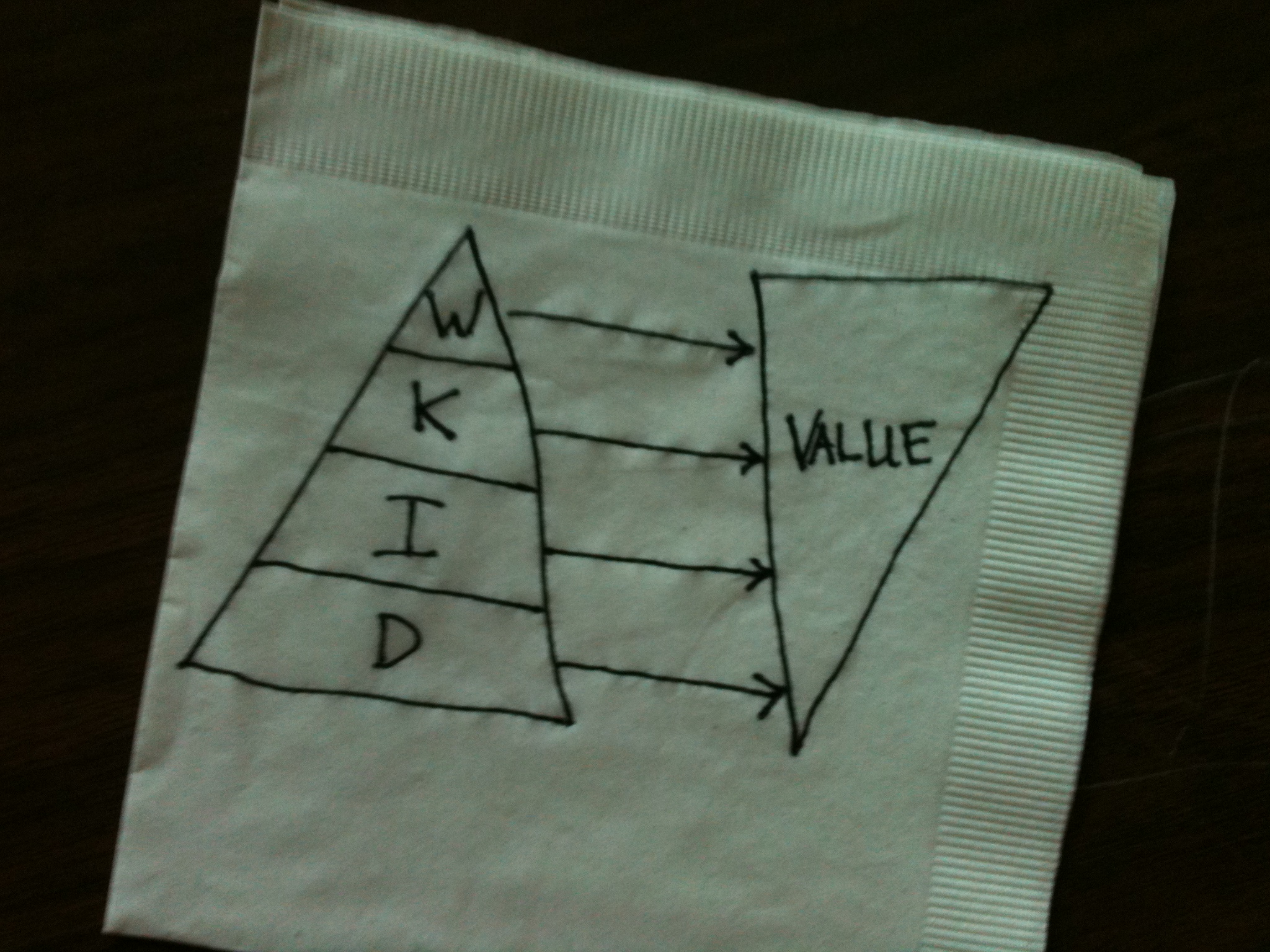
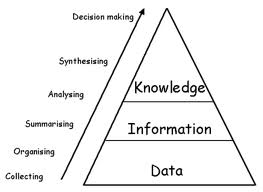
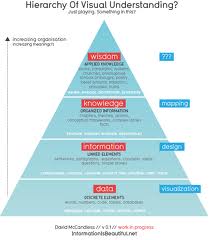
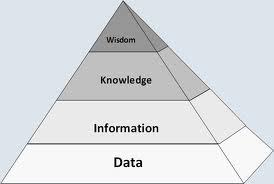
“Darwin spent five years sailing in a small boat, Galileo defied the Pope, and Madame Curie handled radioactive materials, all in pursuit of knowledge as the most profound of human goals. That is what knowledge meant in our culture, and it has little to do with the middle layer of a made up pyramid that shears knowledge of all but its most prosaic, get-‘er-done utility.

Despite this, the DIKW pyramid gets one thing very right about how we’ve thought about knowledge. Our most basic strategy for understanding a world that far outruns our brain’s capacity has been to filter, winnow, and otherwise reduce it to something more manageable…. Knowledge has been about reducing what we need to know…

It’s the connecting of knowledge—the networking—that is changing our oldest, most basic strategy of knowing. Rather than knowing-by-reducing to what fits in a library or a scientific journal, we are now knowing-by-including every draft of every idea in vast, loosely connected webs. “–David Weinberger, Too Big To Know, 2011

Posted in Social Impact, World Wide Web | Leave a comment

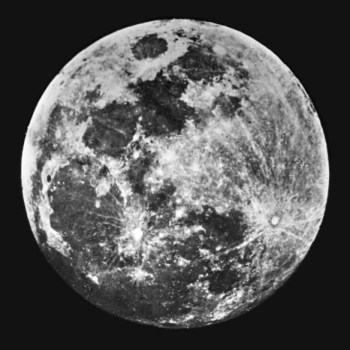
First photograph of a solar eclipse

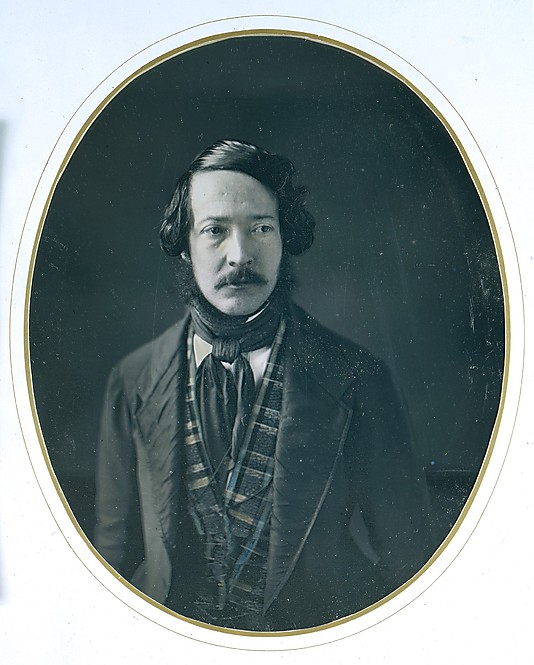
Daguerreotype of William Langenheim taken by Frederick Langenheim ca. 1848–50

Today in 1857, Frederick Langenheim took the first photograph of a solar eclipse. From the Metropolitan Museum website: “In 1841-42, William and Frederick Langenheim opened a daguerreotype studio in Philadelphia. Known for their technical innovations the former journalists were not the city’s first but were certainly its most celebrated photographers. The brothers pioneered a technique of hand-coloring daguerreotypes (1846), purchased Henry Talbot‘s United States patent for paper photography (1849), invented a system of making negatives and positives on glass (1848-50), and introduced stereoscopic photography to the American public (1850).

This mammoth plate daguerreotype is one of the very few to have survived. It served perhaps to advertise or promote the firm, a convincing example of the Langenheims’ professional mastery.”

Posted in Photography, This day in information | Leave a comment

Facebook for Cows?

Three updates on a previous blog post on connected cows and the Internet of Things: Continue reading

Posted in Agriculture, Big Data, Internet of things | Leave a comment

Open Web Vs. Apps: Who Wins?

Pew Internet Project and Elon University’s Imagining the Internet Center surveyed 1,021 “technology stakeholders and critics” to gauge their opinions regarding whether the open Web or Apps will rule in 2020. (For the origin of this debate, see  “The Web is Dead. Long Live the Internet” Wired, September 2010, Tim Berners-Lee’s response, and my take at the time). Only 35% opted for the dominance of Apps scenario. But out of the 59% that “agreed with the statement that most people will trust and rely upon the open Web to access and share information over the Internet, a significant number… said the true outcome will reflect parts of both scenarios, and some people said their choice of the Web as the winner was their ‘vote’ for what they hope to be the 2020 outcome.”

So far, the people using the Web have “voted” differently. A sobering fact cited in the report: “In June 2011, researchers reported that time spent on apps began to outpace time spent on the desktop or mobile Web. The change reflected a 91% increase in time spent with apps between June 2010 and June 2011.”

Posted in Futures, Open Web | Leave a comment

First U.S. Moon Shot

Today in 1840, John William Draper presented to the Lyceum of Natural History of New York a daguerreotype of the “first representation of the moon’s surface ever taken by photography.”

As the Once and Future Moon blog notes, today is also “the 100th anniversary of the birth of Wernher von Braun (1912-1977), the man most responsible for creating and implementing a vision of humans in space. Von Braun is legendary in space circles – both admired and

criticized by observers within and outside of the program.” A series of articles in Collier’s magazine in the early 1950s, titled “Man Will Conquer Space Soon!,” Von Braun and others described plans for manned spaceflight.

Posted in Photography, This day in information, Yesterday's Futures | Leave a comment

The Sound of Digital Crushing Analog

Posted in Analog, Computer history, Dead media, Telephone | Leave a comment

Data, Information, Knowledge, Whatever

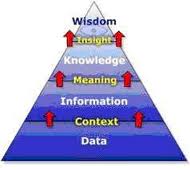
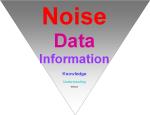
“Noise becomes data when it has a cognitive pattern. Data becomes information when assembled into a coherent whole, which can be related to other information. Information becomes knowledge when integrated with other information in a form useful for making decisions and determining actions. Knowledge becomes understanding when related to other knowledge in a manner useful in anticipating, judging and acting. Understanding becomes wisdom when informed by purpose, ethics, principles, memory and projection.”–George Santayana, The Life of Reason, 1905 Continue reading

Posted in Quotes | Leave a comment

Data Mania, 1971

“Too many information handlers seem to measure a man by the number of bits of storage capacity his dossier will occupy… The new information technologies seem to have given birth to a new social virus – ‘data mania.’ It symptoms are shortness of breath and heart palpitations when contemplating a new computer application, a feeling of possessiveness about information and a deep resentment toward those who won’t yield it, a delusion that all information handlers can walk on water, and a highly advanced case of antistigmatism that prevents the affected victim from perceiving anything but the intrinsic value of data”–Arthur Miller, The Assault on Privacy, 1971

Posted in Big Data, Quotes, Social Impact | 1 Comment

Texting Teens

Pew Internet reported today that texting is the dominant daily mode of communication between teens and all those with whom they communicate. The volume of texting among teens has risen from 50 texts a day in 2009 to 60 texts for the median teen text user.

Among all teens:

  • 63% say that they use text to communicate with others every day.
  • 39% of teens make and receive voice calls on their mobile phones every day.
  • 35% of all teens socialize with others in person outside of school on a daily basis.
  • 29% of all teens exchange messages daily through social network sites.
  • 22% of teens use instant messaging daily to talk to others.
  • 19% of teens talk on landlines with people in their lives daily.
  • 6% of teens exchange email daily.
Posted in Mobile, Social Impact | Leave a comment