“This is Our Last Cry Before Our Eternal Silence”

“CALLING all. This is our last cry before our eternal silence.” Surprisingly this message, which flashed over the airwaves in the dots and dashes of Morse code on January 31st 1997, was not a desperate transmission by a radio operator on a sinking ship. Rather, it was a message signalling the end of the use of Morse code for distress calls in French waters. Since 1992 countries around the world have been decommissioning their Morse equipment with similar (if less poetic) sign-offs, as the world’s shipping switches over to a new satellite-based arrangement, the Global Maritime Distress and Safety System. The final deadline for the switch-over to GMDSS is February 1st [1999], a date that is widely seen as the end of an era.–The Economist, January 23, 1999.

Posted in Telegraph, This day in information | 1 Comment

Counting Money Honestly: The First Cash Register

Cash Register 1879

Today in 1883, James Ritty, a saloonkeeper in Dayton, Ohio, and John Birch received a patent (No. 271,363) for the first cash register, nicknamed the “Incorruptible Cashier.” There was a bell to ring up sales, referred to in advertising as “The Bell Heard Round the World.”

John Patterson, founding president of the National Cash Register Company, used the following message from 1885 through 1915 to demonstrate the limitations associated with the cash drawer which the cash register replaced:

Continue reading

Posted in This day in information | Leave a comment

First Librarian of Congress Takes Office

Today in 1802, John J. Beckley became the first Librarian of the U.S. Congress. Beckley is also considered the first political campaign manager in the U.S. The Library of Congress was established less than two years earlier by an act of Congress.

Posted in Libraries, This day in information | Leave a comment

Moon Shot

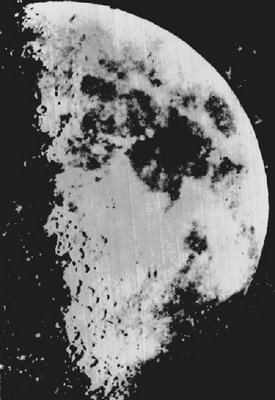
Earliest known photograph of the Moon, a daguerreotype taken in 1851

Today in 1839, Louis Daguerre took the first photograph of the Moon. In December 1839, John W. Draper made a daguerreotype of the moon with the camera he built, becoming the first person in the US to photograph a celestial body.

Posted in Photography, This day in information | Leave a comment

The Ultimate Question

“[In Douglas Adams’ A Hitchhiker’s Guide to the Galaxy,] a race of hyper-intelligent pan-dimensional beings built a computer named Deep Thought to calculate the Answer to the Ultimate Question of Life, the Universe, and Everything. When the answer was revealed to be 42, Deep Thought explained that the answer was incomprehensible because the beings didn’t know what they were asking.”–Wikipedia

“It is not at all clear that human brains will be capable of understanding why the supercomputers have come up with the answers they have… We would have knowledge but no understanding.”–David Weinberger in the December 2011 issue of Scientific American, writing about the FutureICT Project, “the machine that would predict the future.”

Posted in Big Data, Quotes | Leave a comment

MIT Study Proves the World is Not Flat

Researchers at MIT and the Korea Advanced Institute of Science and Technology, modeling the diffusion of social contagion by studying the spread of Twitter from 2006 to 2009, have found that “the site’s growth in the United States relied primarily on media attention and traditional social networks based on geographic proximity and socioeconomic similarity. In other words, at least during those early years, birds of a feather flocked — and tweeted — together.”

“Even on the Internet where we may think the world is flat, it’s not,” says Marta González, assistant professor of civil and environmental engineering and engineering systems at MIT, who is co-author of a paper on this subject appearing this month in the journal PLoS ONE. “The big question for people in industry is ‘How do we find the right person or hub to adopt our new app so that it will go viral?’ But we found that the lone tech-savvy person can’t do it; this also requires word of mouth. The social network needs geographical proximity. … In the U.S. anyway, space and similarity matter.”

In other words, the more things change, the more they stay the same…


Posted in Information diffusion, Innovation, Network Effect, Social Networks, Twitter | Leave a comment

Race Against the Machine

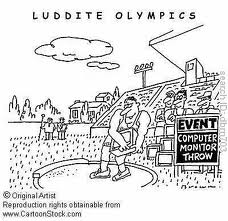
“At least since the followers of Ned Ludd smashed mechanized looms in 1811, workers have worried about automation destroying jobs. Economists have reassured them that new jobs would be created even as old ones were eliminated. For over 200 years, the economists were right. Despite massive automation of millions of jobs, more Americans had jobs at the end of each decade up through the end of the 20th century. However, this empirical fact conceals a dirty secret. There is no economic law that says that everyone, or even most people, automatically benefit from technological progress.”- Erik Brynjolfsson and Andrew McAfee, “Why Workers Are Losing the War Against Machines,” Atlantic Monthly, October 26, 2011

Continue reading

Posted in Artificial Intelligence, Information Economy, Social Impact | Leave a comment

Aerial Photography First Patent

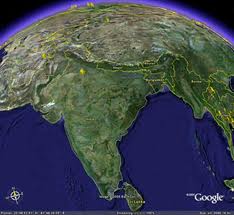
Today in 1893, the first US patent for aerial photography is issued to Cornele B. Adams of Augusta, Georgia (US No. 510,758).  His method of photogrammetry can produce a topographic map by means of photographing the same tract of land from different points from an unmanned stationary balloon on a tether. “The pictures obtained can be converted into topographic maps, to delineate not only the horizontal positions and distances of the objects correctly, but from which the altitude of the objects can be quickly and accurately ascertained, and such results obtained without the aid of other field instruments.” Continue reading

Posted in Google, Photography, This day in information, World Wide Web | Leave a comment

An Interview with Roy Freed: The law, the computer, and the mind

2011 marks the 50th anniversary of the first educational program on computer law, sponsored by the Joint Committee on Continuing Professional Education of the American Law Institute and the American Bar Association (ALI-ABA). Ten years later, at the 1971 annual conference of the ACM, Roy Freed and six colleagues founded the Computer Law Association (CLA), an international bar association (renamed later as the International Technology Law Association).   Continue reading

Posted in Interviews | Leave a comment

Playing Games, Social and Digital

Christoph Weiditz'a 1528 drawing of Central American ballplayers at the court of Emperor Charles V

“One of the characteristics of organized game throughout history is their capacity to transcend cultural differences, social divisions and even political unrest. Straddling the boundary between the sacred and the profane, they can be great social unifiers and dividers. There are few other things that we collectively care about so much in our society today. “–Neil MacGregor, A History of the World in 100 Objects, 2010

Continue reading

Posted in Social Impact, Video Games | Leave a comment