From the Archives: Measurement Milestone

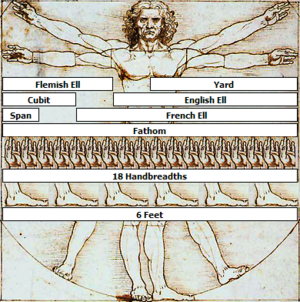
Today in 1790, the French National Assembly passed two decrees: One asked the French Academy of Sciences to determine “the scale of division most suitable for weights and measures and for coins;” the other instructed the French Academy to work with the Royal Society in London to “deduce an invariable standard for all the measures and all the weights.”  This, says a web site dedicated to the man who first advanced the idea, Charles-Maurice de Talleyrand-Périgord, was “the first legislation in a series of acts that led, fifty years later, to the final adoption of the metric system in France and later, with few exceptions, worldwide.”  Continue reading
Posted in Measurement, This day in information | Leave a comment

1895 Computer

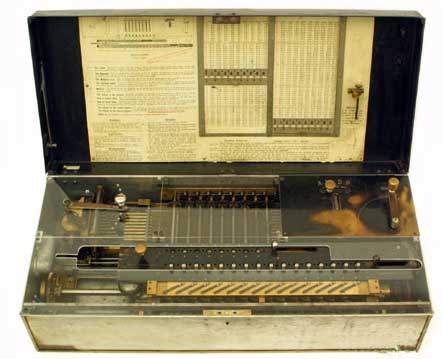
Today in 1895, Otto Steiger was issued a patent for his Millionaire calculating machine. For the next 40 years, Switzerland’s Hans Egli manufactured 4,700 machines, which weighed 120 pounds each. The Millionaire was notable in its ability to perform direct multiplication, which meant a user could multiply a number by a single digit with a single rotation of the handle.

Posted in Computer history, This day in information | Leave a comment

From the Archives: Sony Established

Founding Prospectus

Today in 1946, more than twenty members of the Tokyo Telecommunications Research Institute, founded by Masaru Ibuka in the previous year, attended the inauguration ceremony which officially established the Tokyo Telecommunications Engineering Corporation. Ibuka’s father-in-law, Tamon Maeda was appointed president of the new company. In his speech at the ceremony, Maeda said: “Today our small company has made its start. With its superior technologies and spirit of perfect unity, the company will grow. As it does so, we can certainly make a contribution to society.” In 1958, the company changed its name to Sony Corporation.

Posted in Computer history, consumer electronics history, Sony, This day in information | Leave a comment

First Disk Drive Announced

Today in 1955, IBM made an announcement that went largely unnoticed outside the computer community and other technical circles. The company reported that a team of engineers working in a small research and development laboratory in San Jose, California, had developed a new magnetic disk storage technology. The product, the 305 RAMAC (Random Access Memory Accounting) was luanched on Septmebr 4, 1956. See here and here and here for my previous posts on the first disk drive.

Posted in Computer history, Information storage, This day in information | 2 Comments

From the Archives: Computer Programming Born

Today in 1949, the Electronic Delayed Storage Automatic Computer (EDSAC), the first practical stored-program computer, ran its first program and performed its first calculation. “… a thin ribbon of paper containing the program [to print a table of the squares of the integers] was loaded into the computer; half a minute later the teleprinter sprang to life and began to print 1, 4, 9, 16, 25…. The world’s first practical stored-program computer had come to life, and with it the dawn of the computer age,” Martin Campbell-Kelly and William Aspray recount the moment in Computer: A History of the Information Machine.   Continue reading

Posted in Computer history, Programming, This day in information | Leave a comment

First Computer Exclusively Designed to Play a Game

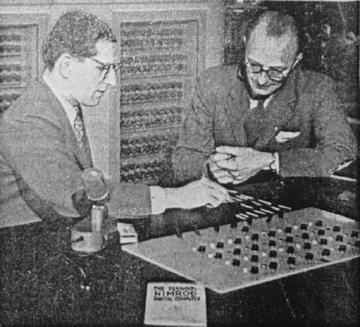
Today in 1951, the NIMROD, a special purpose computer that played the game of Nim, was displayed at the Exhibition of Science during the Festival of Britain. Designed and built by Ferranti, it was the first digital computer exclusively designed to play a game, though its true intention was to illustrate the principles of the digital computer for the public.  Continue reading

Posted in Computer Games, Computer history, This day in information | Leave a comment

Cattle Logs from 1882 to 2012

Holstein-Friesian cattle of the Brookbank herd, Iowa City c1886

After seeing a card catalogue in the Iowa State University library in 1882,  Thomas B. Wales, the secretary of the Holstein-Friesian Association of America, applied the idea to the 40,000 animals in the Holstein-Friesian Herd Book. He estimated that the number of new cards will double every two years. Noted Edward Tenner (in “From Slip to Chip,” Harvard Magazine, November-December 1990): “Here was a ‘cattle log’ in the truest sense.”  Continue reading

Posted in Agriculture, Big Data, Digitization, Economic Impact, information organization, Social Impact | Leave a comment

The Past and Future of Moving Money

Stephanie Buck, Masahable: “…are consumers ready to wholeheartedly adopt the latest in mobile payment technology? Adults who are unbanked, for instance, may face a barrier to mobile transactions — there are currently 17 million unbanked adults in the U.S. But many smartphone users welcome the convenience of mobile payments (87% in the UK), while others worry about the privacy factor (79% in Asia). Still, 49% of consumers in the U.S. found shopping on a smartphone awkward.

Then again, many people found paper checks awkward and credit cards confusing the first time around.”  Continue reading

Posted in Automation, Digitization, eCommerce, Economic Impact, Information Economy, Internet Economy, Mobile, Social Impact, The InfoStory Quant | 1 Comment

Birth of Botanical Classification, Taxonomy

Today in 1753, Carl Linnaeus published the first edition of his two volume work Species Plantarum, in which he used for the first time a consistent naming structure for plants and laid the basis for modern nomenclature. The classification employed in the work allowed easy identification of plants, by placing every genus into an artificial class and order. Linnaeus is often called the father of classification. The Species Plantarum will be adopted by international consent in 1905 as the starting point for modern botanical nomenclature.

Posted in classification, information organization, Taxonomy, This day in information | Leave a comment

The Earth Shrunk in the 19th Century

“A critical fact in the world of 1801 was that nothing moved faster than the speed of a horse. No human being, no manufactured item, no bushel of wheat … no letter, no information, no idea, order, or instruction of any kind moved faster. Nothing ever had moved any faster, and, as far as contemporaries were able to tell, nothing ever would.”–Stephen Ambrose in Undaunted Courage

“The means of intercommunion are so wonderfully perfected that for practical purposes the earth is not one-twentieth part as big as when it was created. Its diameter is the same, its circumference is the same, the number of leagues ad miles between its latitude and longitudes is the same; but the traveller does not find the journey so long. The facility of travelling is such that the world is not much bigger now than a country used to be. Do you suppose the diminution of time, which amounts to the diminution of space, does not have the practical effect to make every particular standpoint an influence that reaches further on? Continue reading

Posted in Information diffusion, Quotes, Social Impact, Telegraph, Transportation | Leave a comment