
The U.S. Census Bureau: Measuring America’s People, Places &
Economy Through the Decades Continue reading
-
Join 186 other subscribers
Categories
Archives
The U.S. Census Bureau: Measuring America’s People, Places &
Economy Through the Decades Continue reading

From a Book of Hours that was produced (between 1496 and 1506) for Joanna of Castile, the daughter of King Ferdinand of Aragon and Isabella of Castile. The British Library: “The strenuous work of summer continues in these two miniatures from the calendar for July, which focuses on the yearly harvest of wheat. On the left folio four men are at work in a field, in what must be very warm weather; the men have all rolled up their sleeves, and two seem to have divested themselves of their trousers as well. On the right, beneath a small and rather scowly lion (for the zodiac sign Leo) another group of men are bringing their harvest to a timbered barn.”
 Today in 1945, John von Neumann published “A First Draft of a Report on the EDVAC.” Campbell-Kelly and Aspray call it in Computer: The History of the Information Machine “the technological basis for the worldwide computer industry.” In A History of Modern Computing, Paul Ceruzzi says it “is often cited as the founding document of modern computing.” What became to be known as the “von Neumann Architecture,” separated the processing of information from its storage, leading to an ongoing imbalance between the speed of the computer’s storage unit and the speed of its processing unit, each advancing along different technological trajectories.
Today in 2007, the first iPhone was released. Continue reading
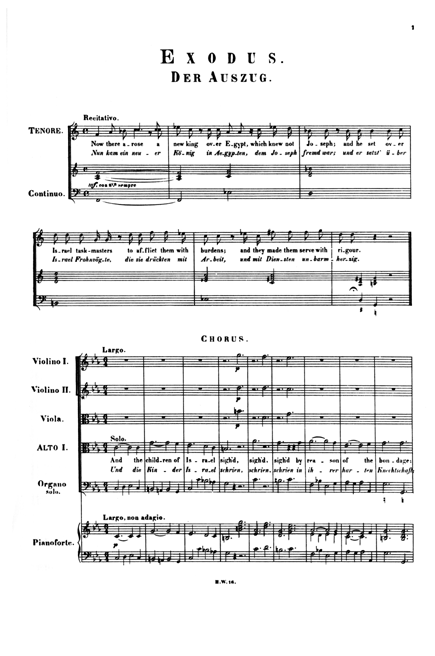 Today in 1888, Edison’s foreign sales agent, Colonel George Gouraud, made a wax cylinder recording in the Crystal Palace, London, of a 3016-person choir performing Handel’s Israel in Egypt at a distance of more than one hundred yards from the phonograph. It was the first “field” recording outside of a studio, as well as the first known recording of classical music.
 “At an early age I made an important discovery: that the pleasure of reading a book could be greatly increased and renewed at will if one actually owned it. To begin with, one could choose the time and place of reading the book, unconstrained by the need to return it to a library or other lawful owner. While reading, appreciation of any particular passage is enhanced by the comfortable awareness that it will always be there–the same words, the same lines, the same pages–whenever one might choose to return to it. And even when not actually reading the book, merely looking at it on the shelf evokes that special pleasure which one derives from the ownership of some beautiful and cherished object.”–Bernard Lewis, Notes on a Century: Reflections of a Middle East Historian
 Today in 2007, the Associated Press reported, the American Medical Association backed off calling excessive video-game playing a formal psychiatric addiction, saying instead that more research is needed. A report prepared for the AMA’s annual policy meeting had sought to strongly encourage that video-game addiction be included in a widely used diagnostic manual of psychiatric illnesses. AMA delegates instead adopted a watered-down measure declaring that while overuse of video games and online games can be a problem for children and adults, calling it a formal addiction would be premature.
Earlier this week Gameranks reported on the “dirty dozen of the gaming industry… rolling in the dough from our videogame-addiction.”
They are all standing on the shoulders of pioneers like Nolan Bushnell and Ted Dabney which forty years ago today filed the incorporation papers for Atari.
Crowdsourcing.org: Jeanne Pi of AppsBlogger used a sample of over 45,000 Kickstarter projects (failed and funded) to create this infographic that paints a wholistic picture of the best-known crowdfunding platform. Continue reading
 Entertainment Software Association: “49% percent of all American homes have a video game console… more Americans than ever are playing video game on smartphones, tablets and handheld devices… More than 30% said they play games on their smartphones, compared to 20% last year. One quarter of gamers said they play games on wireless devices, up from 13% in 2011…. 33% of gamers said they play social games and 15% said they pay to play online games… among U.S. households that own a game console, PC, smartphone, handheld system or wireless device, nearly 40% play games on their smartphone and 26% play them on their wireless device.”
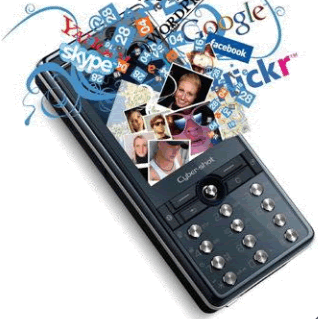 Pew Internet: “17% of cell phone owners do most of their online browsing on their phone, rather than a computer or other device. Most do so for convenience, but for some their phone is their only option for online access. Some 88% of U.S. adults own a cell phone of some kind as of April 2012, and more than half of these cell owners (55%) use their phone to go online…this represents a notable increase from the 31% of cell owners who said that they used their phone to go online as recently as April 2009. Moreover, 31% of these current cell internet users say that they mostly go online using their cell phone, and not using some other device such as a desktop or laptop computer. That works out to 17% of all adult cell owners who are ‘cell-mostly internet users’—that is, who use their phone for most of their online browsing.”
 The Story of Information